

ASTM F136 titanium is one of the most widely recognized titanium alloy specifications for surgical implant applications. In simple terms, it refers to wrought annealed Ti-6Al-4V ELI titanium alloy, also known as Grade 23 titanium or UNS R56401. ASTM describes F136 as covering the chemical, mechanical, and metallurgical requirements for wrought annealed titanium-6aluminum-4vanadium ELI alloy used in the manufacture of surgical implants. The product forms include strip, sheet, plate, bar, forging bar, and wire.
For buyers in the medical device, orthopedic, trauma, spinal, dental, and precision machining industries, ASTM F136 is not just a material name. It is a quality reference. It tells engineers and purchasing teams that the titanium alloy must meet stricter requirements than ordinary industrial titanium. When a drawing or purchase order says “ASTM F136,” it usually means the customer expects controlled chemistry, reliable mechanical performance, traceability, and implant-related documentation.
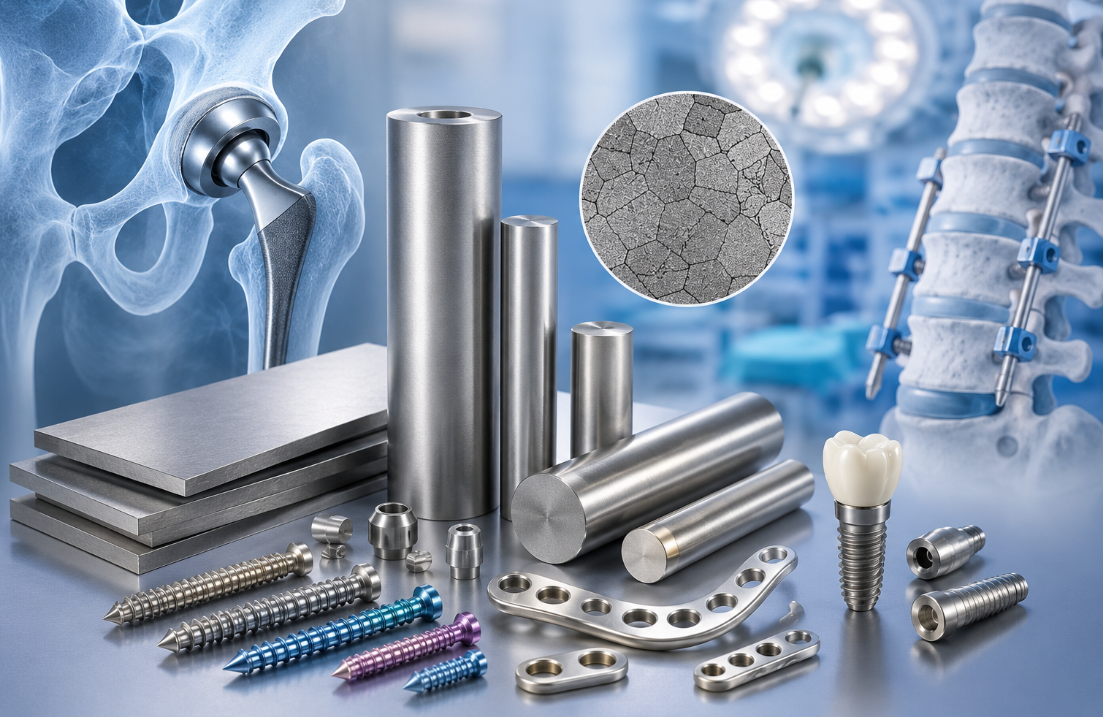
This article explains what ASTM F136 titanium is, why it matters, how it compares with other implant materials, and what B2B buyers should check before sourcing it.
What Does ASTM F136 Mean?
ASTM F136 is a standard specification for wrought titanium alloy used for surgical implant applications. The alloy is Ti-6Al-4V ELI, which means it contains roughly 6% aluminum and 4% vanadium, with titanium as the balance. “ELI” stands for “Extra Low Interstitial.”
Interstitial elements such as oxygen, nitrogen, carbon, and hydrogen can strongly affect titanium’s ductility, toughness, and fatigue behavior. In implant applications, these details matter because the material may be used in parts that must withstand repeated loading, machining, polishing, sterilization, and long-term service inside the human body.
ASTM F136 is closely related to ISO 5832-3, which specifies requirements and test methods for wrought Ti-6Al-4V alloy used in surgical implants. In international sourcing, buyers may request ASTM F136, ISO 5832-3, or both depending on their regulatory market, internal quality system, and end application.
ASTM F136 Titanium Is Also Called Grade 23 Titanium
ASTM F136 titanium is often described by several names:
ASTM F136 titanium
Ti-6Al-4V ELI
Titanium Grade 23
Grade 23 titanium
UNS R56401
Implant-grade Ti64 ELI
ISO 5832-3 titanium alloy
This creates some confusion for buyers. Grade 23 is not the same as standard Grade 5 titanium, although both are Ti-6Al-4V alloys. The main difference is that Grade 23 has lower interstitial limits and is intended for more demanding medical or high-performance applications.
Grade 5 titanium is widely used in aerospace, industrial, marine, and engineering components. Grade 23 titanium is more commonly selected when improved toughness, ductility, and implant-related material control are required. Carpenter Technology notes that Ti-6Al-4V ELI has superior damage tolerance and fracture toughness compared with standard Ti-6Al-4V.
Why Is ASTM F136 Titanium Used for Implants?
ASTM F136 titanium is used in implant manufacturing because it offers a strong balance of biocompatibility, strength, corrosion resistance, machinability, and fatigue performance.
The medical device industry rarely chooses materials based on one property alone. A surgical implant material must not only be strong; it also needs to be stable in the body, predictable during manufacturing, and compatible with strict quality documentation. ASTM F136 titanium fits this requirement well.
Compared with commercially pure titanium, ASTM F136 titanium generally provides higher strength. This makes it suitable for load-bearing or high-stress implant components. Compared with stainless steel, titanium offers lower density and excellent corrosion resistance. Compared with cobalt-chromium alloys, titanium is lighter and often easier to machine for certain component geometries.
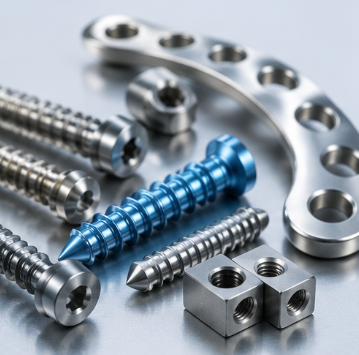
Common applications include orthopedic screws, bone plates, spinal implants, trauma fixation devices, dental implant components, surgical instruments, and precision medical parts. For dental applications, Ti-6Al-4V ELI may be used in selected implant components or prosthetic parts where strength and precision machining are important.
ASTM F136 vs ASTM F67 Titanium
ASTM F67 and ASTM F136 are both important standards in medical titanium, but they are not the same.
ASTM F67 covers unalloyed titanium for surgical implant applications, including Grade 1, Grade 2, Grade 3, and Grade 4 titanium. These are commercially pure titanium grades, meaning they do not intentionally contain aluminum and vanadium like Ti-6Al-4V.
ASTM F136, on the other hand, covers Ti-6Al-4V ELI alloy. It is an alpha-beta titanium alloy with higher strength than commercially pure titanium.
Item | ASTM F67 | ASTM F136 |
|---|---|---|
Material type | Commercially pure titanium | Ti-6Al-4V ELI titanium alloy |
Common grade | Grade 1–4 | Grade 23 |
Main alloying elements | Titanium, controlled impurities | Titanium + aluminum + vanadium |
Strength | Lower to medium, depending on grade | Higher |
Ductility | Generally good | Good, with ELI control |
Typical use | Dental implants, surgical implants, parts needing pure titanium | Load-bearing implants, orthopedic parts, dental/medical components |
For B2B sourcing, the choice depends on the drawing, end use, regulatory requirements, and customer approval. A buyer should not simply replace ASTM F67 with ASTM F136 or the other way around without engineering confirmation.
ASTM F136 vs Grade 5 Titanium
This is one of the most common sourcing questions: is ASTM F136 the same as Grade 5 titanium?
The answer is no.
Both materials are based on Ti-6Al-4V chemistry, but ASTM F136 refers to Ti-6Al-4V ELI, also known as Grade 23. Standard Grade 5 titanium has wider interstitial limits and is more common in aerospace and industrial markets.
Item | Grade 5 Titanium | ASTM F136 Titanium |
|---|---|---|
Common name | Ti-6Al-4V | Ti-6Al-4V ELI |
Grade | Grade 5 | Grade 23 |
Interstitial control | Standard | Extra low interstitial |
Typical market | Aerospace, industrial, engineering | Medical implant, high-performance medical parts |
Documentation expectation | Industrial or aerospace certificates | Implant-grade traceability and testing |
Substitution risk | Not automatically suitable for implants | More appropriate for implant-related specifications |
For medical buyers, this distinction is critical. A supplier may offer “Ti-6Al-4V” at a lower price, but if the purchase order requires ASTM F136, standard Grade 5 material may not be acceptable.
ASTM F136 vs 316LVM Stainless Steel
316LVM stainless steel is another common medical material. It is used in surgical instruments, temporary implants, wires, orthopedic devices, and precision medical components. Compared with ASTM F136 titanium, 316LVM is usually heavier and has lower strength-to-weight performance, but it can be more cost-effective and easier to process in certain applications.
ASTM F136 titanium is generally chosen when lightweight performance, corrosion resistance, and long-term implant compatibility are priorities. 316LVM may be selected when cost, formability, or specific device requirements make stainless steel suitable.
For buyers, the decision is not simply “which material is better.” It is about which material matches the device design, regulatory pathway, mechanical load, manufacturing process, and price target.
ASTM F136 vs CoCrMo Alloy
Cobalt-chromium-molybdenum alloys such as CoCrMo are often used in orthopedic implants, dental frameworks, and wear-resistant components. Compared with ASTM F136 titanium, CoCrMo generally offers higher hardness and better wear resistance, but it is also denser and more difficult to machine.
ASTM F136 titanium is lighter, has excellent corrosion resistance, and is widely accepted for implant applications. CoCrMo may be preferred where wear resistance and high hardness are critical, such as certain joint or dental prosthetic applications.
For B2B buyers sourcing implant materials, it is common to compare titanium, stainless steel, and cobalt alloys together. The best choice depends on the product’s function, machining method, surface treatment, and regulatory requirements.
Key Properties Buyers Care About
When purchasing ASTM F136 titanium, buyers usually care about more than the alloy name. Important factors include:
Chemical composition
Mechanical properties
Microstructure
Heat treatment condition
Ultrasonic testing requirement
Surface condition
Dimensional tolerance
Straightness and roundness
Certificate format
Melt source
Batch traceability
Inspection report
Cutting and machining availability
For example, a medical CNC machining company may care deeply about bar straightness, diameter tolerance, and surface defects. A distributor may care more about stable stock, repeatable batches, certificate accuracy, and flexible cutting service. A medical implant manufacturer may require strict documentation, full traceability, and consistent mechanical properties.
This is where supplier selection becomes important. A low price is useful only if the material can pass incoming inspection and support the final device manufacturing process.
Common Product Forms of ASTM F136 Titanium
ASTM F136 titanium can be supplied in several forms, depending on the buyer’s processing route.
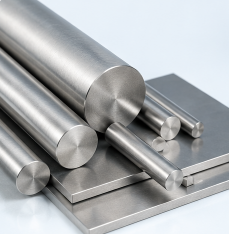
Bar and rod are widely used for CNC machining of screws, pins, abutments, small orthopedic components, dental parts, and precision medical parts. Plate and sheet may be used for plates, frames, or components requiring milling and forming. Wire may be used for specific medical applications or further processing. Forging bar may be selected for applications requiring hot working or forged implant parts.
Many B2B buyers do not only need “material.” They need material that is ready for production. This may include cutting to short lengths, chamfering, peeling, grinding, polishing, or customized packaging. For medical and precision manufacturing customers, these value-added services can reduce waste and improve production efficiency.
Sunxin supplies titanium and medical metal materials for B2B customers who need stable material quality, batch traceability, and flexible processing support. For ASTM F136 titanium, buyers commonly ask for bar, rod, plate, and cut-to-size material according to project requirements. This kind of supplier support is especially useful for medical machining companies, dental component manufacturers, and distributors handling multiple specifications.
Why “Implant Grade” Should Not Be Used Carelessly
Many websites use the phrase “implant grade titanium,” but buyers should be careful. “Implant grade” is not enough by itself. A serious purchase order should specify the exact standard, grade, product form, size, condition, testing requirement, and certificate requirement.
For example, “implant grade titanium bar” is too vague. A better specification would be:
ASTM F136 Ti-6Al-4V ELI titanium bar
Diameter: 12 mm
Condition: annealed
Surface: ground or polished
Certificate: EN 10204 3.1 / mill test certificate
UT test: required if applicable
Length: according to order
This reduces misunderstanding between buyer and supplier. It also helps quality teams check the material against the correct standard.
What Documents Should Buyers Request?
For ASTM F136 titanium, B2B buyers should usually request a material test certificate. Depending on the application, they may also request chemical composition, mechanical test results, heat number, batch number, heat treatment condition, dimensional inspection, ultrasonic testing, surface inspection, and traceability documents.
For medical applications, documentation is not a small detail. If the material cannot be traced clearly, it may create problems during customer audit, incoming inspection, or regulatory review.
A reliable supplier should be able to explain what documents can be provided before the order is placed. This is particularly important for distributors because they may need to answer technical questions from downstream customers.
Common Sourcing Mistakes
One common mistake is confusing Grade 5 with ASTM F136. Standard Ti-6Al-4V may look similar on paper, but it is not automatically acceptable for implant-related orders.
Another mistake is focusing only on chemical composition while ignoring mechanical properties and metallurgical requirements. For medical titanium, chemistry alone is not enough.
A third mistake is buying from suppliers who cannot provide clear traceability. This may look cheaper at the beginning but can create serious risk later.
A fourth mistake is failing to confirm product form. ASTM F136 covers wrought forms such as strip, sheet, plate, bar, forging bar, and wire. Buyers should clearly state which form they need and how it will be processed.
How to Choose an ASTM F136 Titanium Supplier
A good supplier should understand both material standards and real manufacturing needs. For B2B customers, the supplier should be able to support technical communication, not only quote a price.
Before placing an order, buyers should check whether the supplier can provide the required standard, stable size range, certificate, cutting service, packaging, export documents, and repeat supply capability.
For buyers who machine medical parts, surface condition and dimensional consistency are especially important. Poor surface quality can increase machining waste. Unstable tolerance can affect CNC efficiency. Inconsistent batches can create problems in customer approval.
SUNXIN’s role as a medical and high-performance metal material supplier is to help customers source suitable titanium, stainless steel, cobalt alloy, and specialty alloy materials according to application requirements. For ASTM F136 titanium projects, the practical value is not only the material itself, but also support with specification confirmation, cutting, identification, inspection, and export-ready documentation.
FAQ
1. Is ASTM F136 the same as Grade 23 titanium?
Yes. ASTM F136 titanium is commonly known as Grade 23 titanium or Ti-6Al-4V ELI. It is the extra-low-interstitial version of Ti-6Al-4V alloy.
2. Is ASTM F136 the same as Grade 5 titanium?
No. Grade 5 is standard Ti-6Al-4V, while ASTM F136 refers to Ti-6Al-4V ELI, also known as Grade 23. ASTM F136 has stricter control of interstitial elements and is commonly used for implant applications.
3. What is ASTM F136 titanium used for?
It is used for surgical implants, orthopedic components, trauma fixation devices, spinal implants, dental components, precision medical parts, and other applications requiring high strength, corrosion resistance, and implant-related material control.
4. What does ELI mean in Ti-6Al-4V ELI?
ELI means Extra Low Interstitial. It refers to stricter control of elements such as oxygen, nitrogen, carbon, and hydrogen, which can influence ductility, toughness, and fatigue behavior.
5. Is ASTM F136 titanium biocompatible?
ASTM F136 titanium is widely used in implant-related applications because Ti-6Al-4V ELI has good biocompatibility, corrosion resistance, and mechanical performance. However, final device biocompatibility also depends on design, manufacturing, cleaning, surface treatment, and regulatory validation.
6. Can ASTM F136 titanium be used for dental implants?
It may be used in dental and medical components where Ti-6Al-4V ELI is specified. However, many dental implant fixtures also use commercially pure titanium under standards such as ASTM F67. The correct material depends on the design and regulatory requirement.
7. What should buyers confirm before ordering ASTM F136 titanium?
Buyers should confirm standard, grade, size, form, condition, tolerance, surface finish, certificate requirement, testing requirement, quantity, packaging, and traceability.
8. Can ASTM F136 replace ASTM F67?
Not automatically. ASTM F136 is Ti-6Al-4V ELI alloy, while ASTM F67 is commercially pure titanium. Substitution should only be made after engineering and regulatory confirmation.
Conclusion
ASTM F136 titanium is a high-performance implant-grade titanium alloy specification for Ti-6Al-4V ELI, also known as Grade 23 titanium. It is valued for its strength, corrosion resistance, biocompatibility, and stricter control of interstitial elements. For B2B buyers, understanding ASTM F136 is essential because the material name, standard, product form, certificate, and traceability all affect whether the material can be accepted for medical manufacturing.
When sourcing ASTM F136 titanium, buyers should avoid vague descriptions such as “medical titanium” or “implant grade titanium” without a clear standard. The safest approach is to define the exact specification, confirm documentation, and work with a supplier who understands both material standards and real production needs.
For manufacturers, machining companies, distributors, and medical component suppliers, SUNXIN can support ASTM F136 titanium and other medical metal materials with practical sourcing, processing, and documentation support for international B2B projects.