
Introduction: Why Material Choice Defines Implant Success
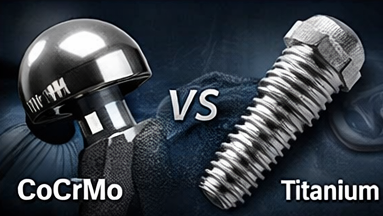
In the medical implant industry, material selection is not just an engineering decision—it is a long-term clinical commitment. Whether you are manufacturing orthopedic devices, dental implants, or surgical components, the choice between Cobalt-Chromium-Molybdenum (CoCrMo) and Titanium alloys can directly influence performance, patient outcomes, regulatory approval, and ultimately, your brand reputation.
While both materials are widely used and clinically proven, they serve fundamentally different purposes. Yet many buyers—especially procurement managers and OEM partners—still make decisions based on outdated assumptions or incomplete comparisons.
This guide goes beyond surface-level differences. It provides a deep technical and commercial comparison, helping B2B buyers and manufacturers understand:
Mechanical and biological behavior
Manufacturing implications
Cost-performance trade-offs
Real-world application scenarios
And most importantly, how to choose the right material for your product line.
Understanding the Materials
What is CoCrMo?
Cobalt-Chromium-Molybdenum (CoCrMo) is a high-performance alloy known for its exceptional wear resistance, strength, and corrosion resistance. It is widely used in:
Orthopedic joint implants (hip and knee prostheses)
Dental prosthetics
High-load surgical components
Its microstructure provides superior hardness and durability, making it ideal for applications involving friction and articulation.
What is Titanium (and Titanium Alloys)?
Titanium, especially alloys like Ti-6Al-4V (Grade 5) and Ti-6Al-4V ELI (Grade 23), is renowned for:
Excellent biocompatibility
Low density (lightweight)
High corrosion resistance
Osseointegration capability
Titanium is the dominant material in:
Dental implants
Bone screws and plates
Spinal implants
Core Comparison: CoCrMo vs Titanium
1. Mechanical Strength and Load-Bearing Capacity
CoCrMo exhibits significantly higher hardness and wear resistance compared to titanium. This makes it the preferred choice for articulating surfaces, such as hip joint heads.
CoCrMo: Superior resistance to wear and deformation
Titanium: Lower hardness but better flexibility
However, titanium’s lower elastic modulus (closer to human bone) reduces stress shielding—a major advantage in long-term implantation.
Key Insight:
Choose CoCrMo for moving parts under friction
Choose Titanium for bone integration and load distribution
2. Biocompatibility and Osseointegration
Titanium is widely regarded as the gold standard for biocompatibility. Its natural oxide layer promotes direct bone integration (osseointegration) without fibrous tissue formation.
CoCrMo, while biocompatible, does not integrate with bone in the same way. Instead, it relies on mechanical fixation or coatings.
Titanium: Excellent osseointegration
CoCrMo: Good biocompatibility, limited bone bonding
This is why nearly all dental implants are made from titanium, not CoCrMo.
3. Wear Resistance and Longevity
In high-friction environments, CoCrMo clearly outperforms titanium.
For example:
Hip joint replacements often use CoCrMo femoral heads
Titanium would wear faster under similar conditions
However, wear particles from CoCrMo (metal ions) have raised concerns in some cases, especially in metal-on-metal implants.
Trend Insight (2026):
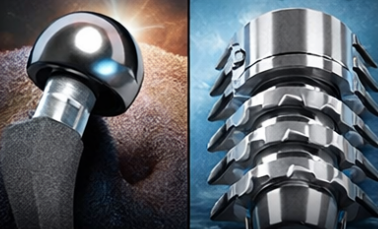
The industry is shifting toward hybrid designs—combining titanium bodies with CoCrMo contact surfaces.
4. Corrosion Resistance
Both materials offer strong corrosion resistance, but through different mechanisms:
Titanium forms a stable TiO₂ oxide layer
CoCrMo relies on chromium oxide for protection
Titanium performs exceptionally well in physiological environments, especially in long-term implants exposed to body fluids.
5. Weight and Patient Comfort
Titanium is significantly lighter than CoCrMo.
Titanium density: ~4.5 g/cm³
CoCrMo density: ~8.3 g/cm³
This difference matters in large implants or multiple-component systems, improving patient comfort and reducing fatigue.
6. Machinability and Manufacturing Complexity
CoCrMo is notoriously difficult to machine due to its hardness and work-hardening behavior. It often requires:
Advanced CNC tools
Higher machining costs
Longer production cycles
Titanium, while also challenging, is generally easier to process compared to CoCrMo.
For manufacturers, this translates into:
Higher production costs for CoCrMo
Better scalability with titanium
This is where working with an experienced supplier becomes critical.
Application-Based Comparison
Orthopedic Implants
Component | Preferred Material | Reason |
|---|---|---|
Femoral head | CoCrMo | Wear resistance |
Implant stem | Titanium | Bone integration |
Knee joint surface | CoCrMo | High durability |
Dental Implants
Titanium dominates this field due to:
Osseointegration
Lightweight nature
Long clinical track record
CoCrMo is rarely used for dental implants but may appear in prosthetic frameworks.
Spinal and Trauma Devices
Titanium is the clear leader because:
It reduces stress shielding
It integrates well with bone
It is MRI-compatible
Cost Considerations for B2B Buyers
From a procurement perspective, the choice is not just about raw material price—it’s about total lifecycle cost.
CoCrMo
Higher machining costs
Longer production time
Excellent durability (lower replacement rate)
Titanium
Higher raw material cost (in some cases)
Lower machining complexity
Faster production scalability
Real-world insight:
Many OEMs are now optimizing cost by using titanium as the base material and applying CoCrMo selectively only where needed.
Emerging Trends in Implant Materials |2026
Hybrid Material Design
Combining titanium structures with CoCrMo surfacesSurface Engineering
Advanced coatings improving wear and osseointegration simultaneouslyAdditive Manufacturing (3D Printing)
Titanium is leading due to better printabilityIon Release Control
Increased focus on reducing metal ion release in CoCrMo implants
How to Choose the Right Material for Your Project
Instead of asking “Which is better?”, B2B buyers should ask:
1. What is the implant function?
Load-bearing? → Titanium
Friction surface? → CoCrMo
2. Is osseointegration required?
Yes → Titanium
No → CoCrMo may suffice
3. What are the regulatory requirements?
Different markets may favor certain materials based on clinical history.
4. What is your cost-performance target?
Balance machining cost vs long-term durability.
Why Material Quality Matters More Than Material Type
One critical mistake many buyers make is focusing only on material type, ignoring material quality consistency.
Even the best alloy can fail if:
Impurities are not controlled
Microstructure is inconsistent
Processing is not standardized
This is why leading manufacturers increasingly rely on specialized material suppliers with deep expertise in medical-grade alloys.
For example, experienced suppliers like SUNXIN provide:
Strict chemical composition control
Certified medical-grade materials (ASTM / ISO standards)
Stable batch-to-batch consistency
Custom processing solutions for implant manufacturers
Rather than simply supplying raw material, they support OEMs in achieving predictable performance and regulatory compliance—a key advantage in competitive global markets.
FAQ: CoCrMo vs Titanium Implants
Q1: Is CoCrMo stronger than titanium?
Yes, CoCrMo is harder and more wear-resistant, but titanium offers better flexibility and bone compatibility.
Q2: Why is titanium preferred for dental implants?
Because of its superior osseointegration and long-term biocompatibility.
Q3: Do CoCrMo implants release metal ions?
Yes, in some cases. This is why modern designs often avoid metal-on-metal contact.
Q4: Which material lasts longer?
It depends on the application:
CoCrMo lasts longer in high-wear environments
Titanium lasts longer in bone-integrated applications
Q5: Can both materials be used together?
Yes. Hybrid designs are increasingly common and often provide the best performance.
Conclusion: It’s Not About Choosing One—It’s About Using Both Strategically
The debate between CoCrMo and titanium is not about superiority—it’s about application fit.
Titanium excels in biological integration and lightweight design
CoCrMo dominates in wear resistance and mechanical durability
The most successful implant systems today combine both materials strategically.
For B2B buyers and manufacturers, the real competitive advantage lies in:
Understanding material behavior deeply
Partnering with reliable suppliers
Optimizing design rather than defaulting to tradition