
Introduction
In the world of advanced biomaterials, few alloys have managed to balance mechanical performance, biocompatibility, and regulatory acceptance as effectively as Ti-6Al-7Nb. While Ti-6Al-4V has long dominated the titanium alloy landscape, increasing scrutiny over vanadium-related cytotoxicity has shifted attention toward niobium-stabilized alternatives.
Ti-6Al-7Nb is not just a “replacement alloy”—it represents a strategic evolution in biomedical material engineering, particularly for long-term implants. For manufacturers, OEM buyers, and procurement teams, understanding its applications is no longer optional—it’s a competitive necessity.
This guide goes beyond surface-level explanations. It explores where Ti-6Al-7Nb is used, why it is chosen over alternatives, and how it performs in real manufacturing environments.
What Exactly is Ti-6Al-7Nb?
Ti-6Al-7Nb is a two-phase (α+β) titanium alloy composed of:
~6% Aluminum (α stabilizer)
~7% Niobium (β stabilizer)
Balance Titanium
It was developed as a biocompatible alternative to Ti-6Al-4V, replacing vanadium with niobium to reduce potential long-term toxicity risks.
Key Standards
ASTM F1295 (medical-grade Ti-6Al-7Nb)
ISO 5832-11
These standards ensure suitability for surgical implants and long-term contact with human tissue.
Core Properties That Drive Its Applications
Before discussing applications, it’s important to understand why Ti-6Al-7Nb is selected.
1. Biocompatibility Without Compromise
Niobium is considered more biologically inert than vanadium, making this alloy ideal for:
Long-term implantation
Sensitive patient groups
Regulatory-sensitive markets (EU, Japan)
2. High Strength with Lower Elastic Modulus
Compared to stainless steel:
Higher strength-to-weight ratio
Lower modulus reduces stress shielding
This makes it especially suitable for load-bearing implants.
3. Excellent Corrosion Resistance
In physiological environments (chloride-rich body fluids), Ti-6Al-7Nb forms a stable oxide layer, ensuring:
Longevity
Reduced ion release
4. Superior Fatigue Resistance
Critical for:
Repetitive load environments
Orthopedic and dental implants
Main Applications of Ti-6Al-7Nb
1. Orthopedic Implants
This is the largest application segment.
Used in:
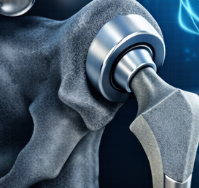
Hip joint prostheses
Knee replacements
Bone plates and screws
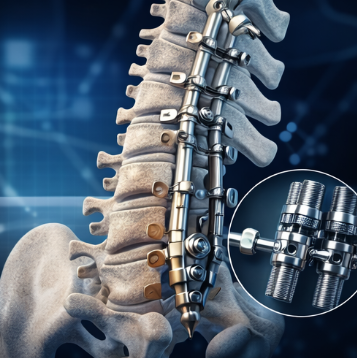
Spinal fixation systems
Why it works:
Matches bone elasticity better than cobalt alloys
Reduces risk of implant loosening
Maintains structural integrity over millions of load cycles
In high-end orthopedic systems, Ti-6Al-7Nb is increasingly preferred where patient safety and longevity are prioritized over cost.
2. Dental Implants and Prosthetic Components
Ti-6Al-7Nb is widely used in:
Implant fixtures
Abutments
Prosthetic frameworks
Key advantages:
Excellent osseointegration
High fatigue strength (critical for chewing cycles)
Improved long-term stability vs commercially pure titanium in high-load cases
Many premium dental implant systems have transitioned to this alloy to differentiate on performance and safety claims.
3. Surgical Instruments (Selective Use)
Although less common than stainless steel, Ti-6Al-7Nb is used in:
Lightweight surgical tools
Specialized implant insertion devices
Reason:
Non-magnetic
Corrosion resistant
High strength with reduced weight
4. Trauma and Fixation Devices
Includes:
Bone screws
Intramedullary nails
Locking plates
Why Ti-6Al-7Nb excels:
Withstands cyclic loading
Maintains mechanical integrity during healing period
Reduces risk of implant failure under stress
5. Custom and Additive Manufactured Implants
With the rise of 3D printing (additive manufacturing):
Patient-specific implants increasingly use Ti-6Al-7Nb
Complex geometries benefit from its mechanical stability
This is an emerging high-growth segment where material consistency becomes critical.
Ti-6Al-7Nb vs Other Implant Materials
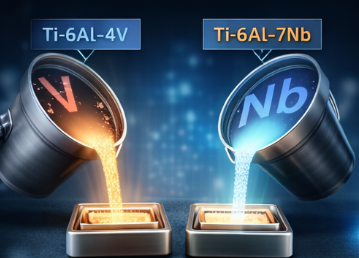
Ti-6Al-7Nb vs Ti-6Al-4V
Property | Ti-6Al-7Nb | Ti-6Al-4V |
|---|---|---|
Biocompatibility | Higher (no vanadium) | Good but debated |
Regulatory acceptance | Increasing | Established |
Cost | Slightly higher | Lower |
Fatigue strength | Comparable | Excellent |
Insight:
Ti-6Al-7Nb is often chosen when long-term safety perception matters, especially in premium markets.
Ti-6Al-7Nb vs Commercially Pure Titanium (CP Ti)
Property | Ti-6Al-7Nb | CP Titanium |
|---|---|---|
Strength | Much higher | Lower |
Fatigue resistance | Superior | Moderate |
Machinability | More complex | Easier |
Insight:
CP titanium is still used in dental implants, but Ti-6Al-7Nb dominates high-load and premium segments.
Ti-6Al-7Nb vs Stainless Steel (316L)
Property | Ti-6Al-7Nb | 316L Stainless Steel |
|---|---|---|
Weight | Much lighter | Heavy |
Corrosion resistance | Excellent | Good |
Elastic modulus | Lower (closer to bone) | Higher |
Insight:
Ti-6Al-7Nb significantly reduces stress shielding, making it more suitable for long-term implantation.
Manufacturing Considerations
This is where many blogs fall short—real-world manufacturability.
1. Melting & Purity Control
Vacuum arc remelting (VAR) is essential
Impurity levels directly affect fatigue life
2. Microstructure Consistency
α+β phase balance must be controlled
Grain size impacts mechanical properties
3. Machining Challenges
Lower thermal conductivity
Tool wear is higher than stainless steel
4. Surface Treatment Compatibility
Sandblasting
Acid etching
Anodization
These processes are critical for osseointegration performance, especially in dental implants.
Supply Chain Reality: Why Material Consistency Matters More Than Specs
Many manufacturers focus only on:
Chemical composition
Basic mechanical properties
But in practice, batch-to-batch consistency determines:
Implant failure rates
Certification success
Long-term customer trust
This is where experienced suppliers—such as companies with medical-grade titanium production expertise like SUNXIN—tend to stand out. Not because of marketing claims, but because of:
Stable melting processes
Traceability systems
Consistent microstructure control
For B2B buyers, this often matters more than minor price differences.
Regulatory and Market Trends
1. Shift Toward Vanadium-Free Alloys
Driven by:
EU MDR regulations
Increasing clinical awareness
2. Growth in Premium Implant Segments
Hospitals and clinics are:
Willing to pay more for perceived safety
Prioritizing long-term outcomes
3. Customization and 3D Printing
Demand for:
Patient-specific implants
Complex geometries
Ti-6Al-7Nb is well-positioned for this shift.
Frequently Asked Questions (FAQ)
Q1: Is Ti-6Al-7Nb better than Ti-6Al-4V?
Not universally. It is better in biocompatibility perception, but performance differences are minimal in many cases. Choice depends on application and regulatory environment.
Q2: Why is niobium used instead of vanadium?
Niobium is:
More biocompatible
Less cytotoxic
More stable in physiological environments
Q3: Is Ti-6Al-7Nb more expensive?
Yes, slightly. But the cost difference is often negligible compared to:
Certification costs
Clinical risks
Q4: Can Ti-6Al-7Nb be used for dental implants?
Absolutely. It is widely used in high-end implant systems, especially where fatigue strength and long-term stability are critical.
Q5: What should buyers focus on when sourcing this alloy?
Beyond specs:
Production method (VAR, forging quality)
Traceability
Supplier experience in medical applications
Conclusion
Ti-6Al-7Nb is not just another titanium alloy—it is a strategic material choice for manufacturers aiming to compete in high-value medical markets.
Its applications in orthopedic and dental implants are driven not only by mechanical properties, but by a broader shift toward:
Safer materials
Regulatory compliance
Long-term clinical performance
For B2B buyers, the real differentiator is no longer just what material you choose, but how consistently it is produced and delivered.