
Introduction
When it comes to medical-grade stainless steel, few comparisons generate as much confusion—and costly procurement mistakes—as 316L vs 316LVM.
On paper, both materials appear nearly identical. They share the same base composition, similar corrosion resistance, and are widely used in medical environments. Yet in real-world applications—especially in implantable devices, surgical instruments, and high-precision components—their performance diverges in ways that directly impact safety, compliance, and long-term reliability.
For manufacturers, OEM buyers, and medical device designers, understanding this distinction is not optional—it is critical.
This guide goes beyond textbook definitions. Instead, it explores:
Metallurgical differences that actually matter in production
Performance under real medical conditions
Regulatory implications
Cost vs value trade-offs
Practical sourcing insights most articles ignore
What Is 316L Stainless Steel?
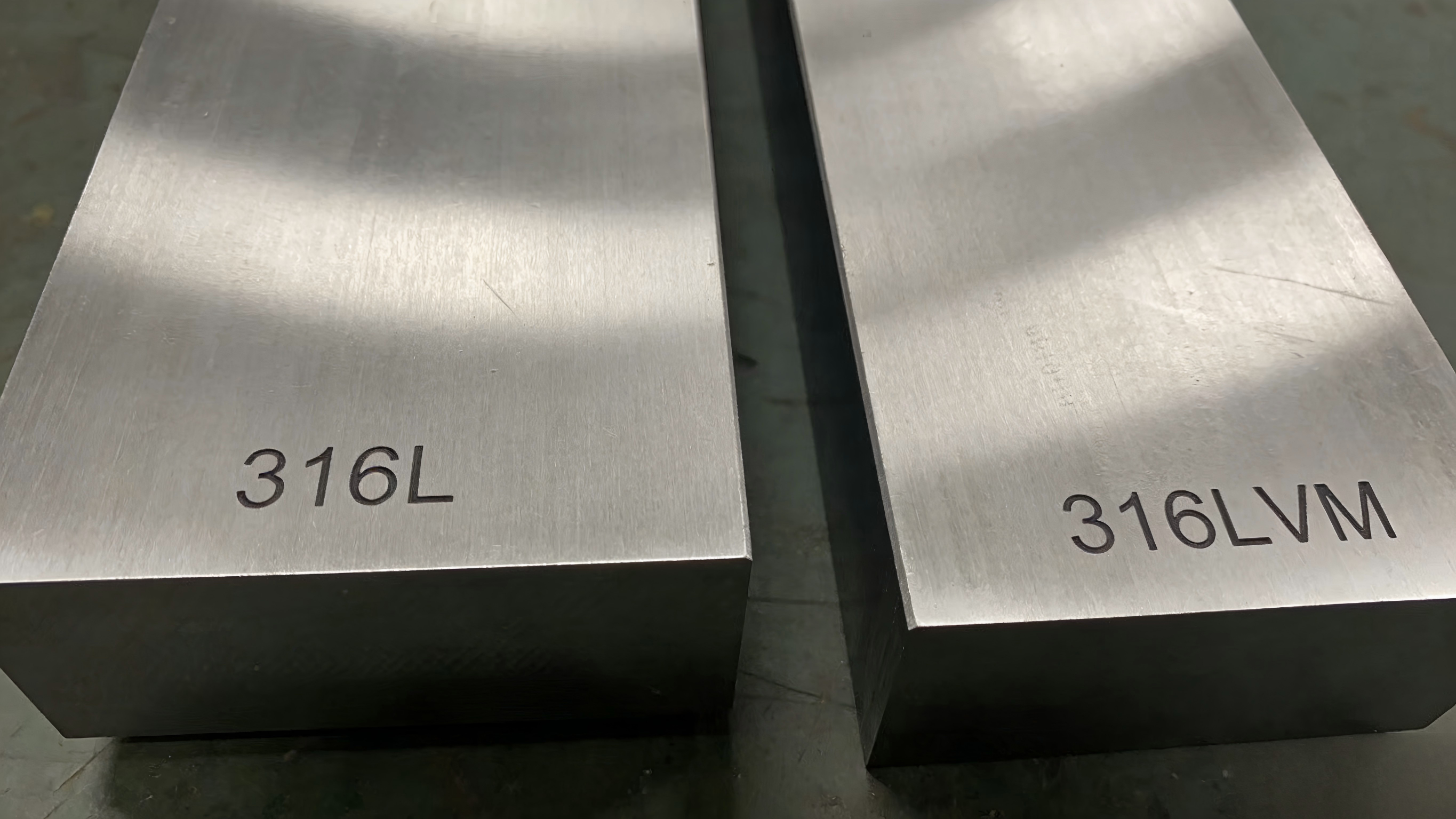
316L is a low-carbon austenitic stainless steel, widely recognized for its corrosion resistance and good mechanical properties.
Key Characteristics
Carbon content ≤ 0.03%
Excellent corrosion resistance (especially in chloride environments)
Good weldability and formability
Widely available and cost-effective
Typical Medical Uses
Surgical instruments
External fixation devices
Non-implantable components
General hospital equipment
316L is often considered the baseline medical stainless steel, suitable for applications where biocompatibility is required but not critically demanding over long implantation periods.
What Is 316LVM Stainless Steel?
316LVM stands for 316L Vacuum Melted, typically produced using Vacuum Induction Melting (VIM) followed by Vacuum Arc Remelting (VAR).
This advanced process fundamentally changes the material’s internal quality.
Key Characteristics
Ultra-low impurity levels
Superior microstructural homogeneity
Enhanced fatigue resistance
Improved polishability
Higher consistency batch-to-batch
Typical Medical Uses
Orthopedic implants (plates, screws, rods)
Cardiovascular devices
Dental implants and surgical-grade components
Long-term implantable systems
In essence, 316LVM is not just a “better version” of 316L—it is a different class of material designed for critical medical performance.
Core Difference: It’s Not Chemistry—It’s Cleanliness
The biggest misconception is that 316LVM differs significantly in chemical composition.
It does not.
The real difference lies in purity and microstructure control.
Standard 316L Production
Produced via conventional melting (e.g., Electric Arc Furnace)
Higher inclusion content (non-metallic particles)
Less control over internal defects
316LVM Production
Vacuum melting removes gases (oxygen, nitrogen, hydrogen)
Significantly reduces inclusions
Produces a more uniform grain structure
Why This Matters
In medical applications, microscopic imperfections can become:
Crack initiation points
Corrosion sites
Fatigue failure origins
This is why 316LVM is preferred for implantable devices, where failure is not acceptable.
Mechanical Performance Comparison
1. Fatigue Strength
316L: Adequate for general use
316LVM: Significantly higher fatigue resistance
This is critical for:
Bone screws under cyclic loading
Cardiovascular components exposed to pulsation
Dental implants experiencing repeated stress
2. Ductility and Toughness
316LVM exhibits:
More consistent elongation
Better fracture resistance
This ensures reliability during:
Surgical insertion
Long-term biomechanical interaction
Corrosion Resistance in the Human Body
Both materials contain molybdenum, giving them strong resistance to pitting and crevice corrosion.
However:
316LVM performs better in physiological environments
Lower inclusion levels reduce corrosion initiation points
Real-World Implication
Inside the human body:
Fluids contain chlorides
pH levels fluctuate
Proteins interact with surfaces
Even minor material defects can accelerate degradation.
316LVM’s cleaner structure provides greater long-term stability, especially for implants.
Surface Finish and Polishability
Surface quality is critical in medical applications.
316L
Good polishability
May show micro-defects under high magnification
316LVM
Superior mirror finish capability
Lower roughness achievable
Better for:
Minimizing bacterial adhesion
Enhancing biocompatibility
Reducing friction in implants
This is especially important for:
Surgical tools
Dental abutments
Joint components
Biocompatibility and Safety
Both materials are considered biocompatible, but not equally.
316L
Suitable for short-term or external contact
Limited long-term implantation reliability
316LVM
Designed for implant-grade applications
Meets stricter standards such as:
ASTM F138
ISO 5832-1
Key Advantage of 316LVM
Lower impurities mean:
Reduced ion release
Lower risk of adverse tissue reactions
Improved long-term integration
Regulatory and Industry Standards
Understanding standards is essential for B2B buyers.
316L
ASTM A240 / A276
General industrial standards
316LVM
ASTM F138 / F139 (implant grade)
ISO 5832-1
Medical device manufacturers targeting:
FDA approval
CE marking
almost always specify 316LVM for implantable components.
Cost vs Value: The Hidden Equation
Material Cost
316L: Lower
316LVM: Higher (due to vacuum processing)
True Cost Consideration
Choosing 316L over 316LVM in critical applications can lead to:
Product failure risks
Regulatory rejection
Increased liability
Brand damage
Strategic Insight for Buyers
Use 316L for:
Non-critical components
External devices
Use 316LVM for:
Implantable devices
High-stress environments
Long lifecycle products
Manufacturing and Supply Chain Considerations
For OEM buyers and procurement managers, material selection is only part of the equation.
What Actually Matters in Sourcing
Consistency across batches
Traceability of raw materials
Process control (melting, forging, machining)
Surface finishing capability
Cleanroom handling (for medical parts)
Even high-grade 316LVM can fail expectations if:
Processing is inconsistent
Quality control is weak
Subtle Industry Insight
Many experienced buyers are shifting focus from:
“Which material?”
to
“Which supplier can guarantee process stability?”
This shift often determines long-term partnership success.
When Should You Choose 316L vs 316LVM?
Choose 316L if:
The component is non-implantable
Cost sensitivity is high
Mechanical stress is low
Regulatory requirements are minimal
Choose 316LVM if:
The device is implanted in the body
Fatigue resistance is critical
Surface quality affects performance
Regulatory compliance is strict
FAQ Section
1. Is 316LVM always required for medical devices?
No. It depends on the application. Non-implantable devices can safely use 316L. However, implantable devices typically require 316LVM due to stricter standards.
2. Does 316LVM have better corrosion resistance than 316L?
Yes, but not because of composition. Its improved corrosion resistance comes from lower impurity levels and fewer inclusions.
3. Can 316L replace 316LVM to reduce cost?
Only in non-critical applications. For implants, this substitution is risky and often non-compliant with medical standards.
4. Is 316LVM harder to machine?
Slightly, due to its cleaner structure and tighter tolerances, but the difference is manageable with proper tooling.
5. Why do some suppliers offer cheaper “316LVM”?
Not all 316LVM is equal. Differences in:
Melting process
Quality control
Certification
can significantly affect performance. Verification is essential.
A Practical Perspective for B2B Buyers
In today’s medical manufacturing landscape, the difference between success and failure is rarely about choosing the “best material” on paper.
It is about choosing a material—and a production approach—that delivers:
Consistency at scale
Reliable compliance
Predictable performance
For many experienced OEM buyers, the real evaluation criteria include:
Process transparency
Manufacturing precision
Long-term supply stability
These factors often outweigh small differences in raw material cost.
Manufacturers with dedicated experience in medical-grade stainless steel production—such as those specializing in controlled melting and precision processing—are often better positioned to meet these evolving demands. Companies like SUNXIN, for example, focus on consistency and process control as core priorities rather than treating material supply as a commodity.
Conclusion
The comparison between 316L and 316LVM is not just technical—it is strategic.
316L is a versatile, cost-effective solution for general medical use
316LVM is a high-purity, performance-driven material designed for critical applications
Understanding when—and why—to use each can:
Improve product reliability
Reduce regulatory risk
Strengthen your competitive position
In a market where medical standards continue to rise, informed material selection is no longer optional—it is a defining advantage.
Related News
-
 Introduction: Why This Comparison Matters More Than You ThinkWhen sourcing stainless steel for industrial, medical, or manufacturing applications, one of the most common—and critical—decisions buyers face is choosing between 304 and 316 stainless steel.At first glance, they look nearly identical. Bo