
Titanium has become one of the most strategically important materials across industries ranging from aerospace and medical to chemical processing and advanced manufacturing. Its unique combination of high strength-to-weight ratio, exceptional corrosion resistance, and biocompatibility makes it irreplaceable in many critical applications.
However, one of the most common and costly mistakes in engineering and procurement is assuming that all titanium behaves the same. In reality, titanium exists in multiple grades, each with distinct mechanical properties, chemical compositions, and performance profiles.
Choosing the wrong grade can result in:
Premature component failure
Unnecessary cost increases
Manufacturing inefficiencies
Regulatory compliance risks
This guide goes beyond surface-level explanations. It provides a structured, decision-oriented approach to help you select the right titanium grade based on real engineering requirements—not just datasheets.
Understanding Titanium Grades: Not Just a Number
Titanium grades are broadly divided into two categories:
1. Commercially Pure Titanium (CP Grades)
These include Grade 1, Grade 2, Grade 3, and Grade 4.
Key characteristics:
Excellent corrosion resistance
Good formability
Lower strength compared to alloys
2. Titanium Alloys
The most common example is Grade 5 (Ti-6Al-4V).
Key characteristics:
Much higher strength
Heat treatable
More demanding machining
The distinction is critical. While CP grades are often chosen for corrosion resistance and ductility, alloys are selected when mechanical performance is the priority.

The Core Decision Framework
Instead of starting with grades, experienced engineers start with application constraints. Below is a structured framework used in real-world material selection.
1. Mechanical Strength Requirements
If your application involves load-bearing structures, strength becomes the first filter.
Low-load environments → Grade 1 or Grade 2
Medium strength needs → Grade 3 or Grade 4
High strength / structural → Grade 5
Insight:
Many buyers default to Grade 5 “just to be safe,” but this often leads to over-specification and unnecessary machining costs.
2. Corrosion Environment
Titanium performs exceptionally well in corrosive environments—but not all grades behave identically.
Seawater / marine → Grade 2 is often sufficient
Chemical processing → Grade 7 (Pd-enhanced) may be required
Acidic environments → Alloy selection becomes critical
Key nuance:
In many cases, Grade 2 offers the best cost-to-corrosion-performance ratio, making it one of the most widely used industrial titanium grades.
3. Weight Sensitivity
Titanium is often chosen to replace steel or nickel alloys for weight reduction.
Aerospace → Grade 5 dominates
Automotive lightweighting → Grade 2 or Grade 5 depending on load
The trade-off is not just weight vs strength—but also manufacturability vs performance.
4. Fabrication and Machinability
Titanium is notoriously difficult to machine. However, machinability varies significantly by grade.
Best formability → Grade 1
Balanced machinability → Grade 2
Difficult machining → Grade 5
Important for procurement teams:
Material cost is only part of the equation. Processing cost can exceed raw material cost, especially for complex components.
5. Regulatory and Industry Standards
Certain industries restrict material choices:
Medical → Grade 2, Grade 4, Grade 5 (implant-grade variants)
Aerospace → Strict AMS / ASTM compliance (often Grade 5 or Grade 23)
Energy / chemical → ASME and corrosion standards
Choosing a non-compliant grade can result in project rejection or certification failure.
Titanium Grade Comparison (Engineering Perspective)
Below is a simplified but practical comparison:
Grade | Type | Strength | Corrosion Resistance | Formability | Typical Use |
Grade 1 | CP | Low | Excellent | Excellent | Chemical processing |
Grade 2 | CP | Medium | Excellent | Good | Industrial, marine |
Grade 3 | CP | Medium-high | Excellent | Moderate | Pressure vessels |
Grade 4 | CP | High | Excellent | Lower | Medical, structural |
Grade 5 | Alloy | Very high | Good | Poor | Aerospace, implants |
Real-World Application Scenarios
Scenario 1: Chemical Processing Equipment
Requirements:
High corrosion resistance
Moderate strength
Good weldability
Optimal choice: Grade 2
Why not Grade 5?
Because the additional strength is unnecessary, while cost and fabrication complexity increase significantly.
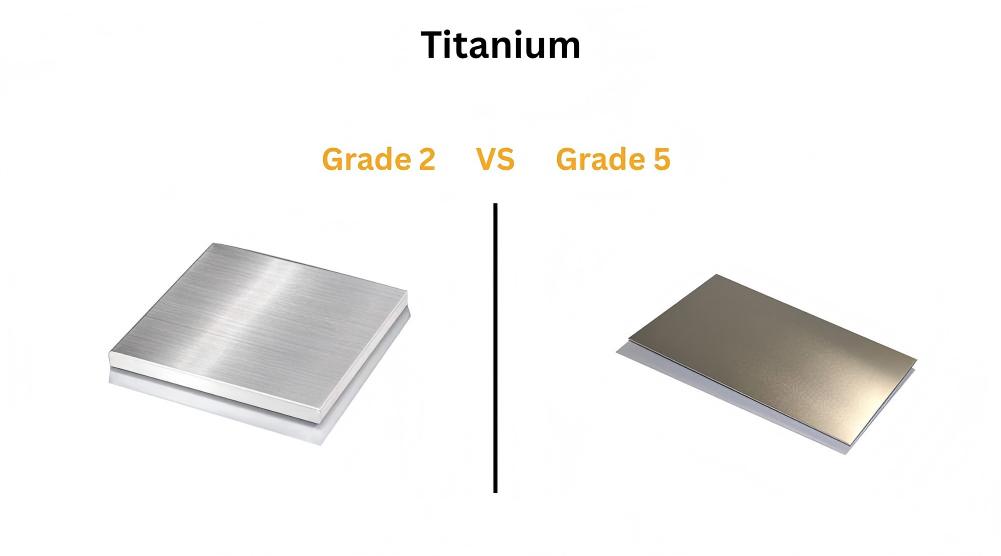
In chemical processing environments, where corrosion resistance is critical, Grade 2 is often the preferred choice due to its balance of performance and cost. In practical sourcing situations, suppliers such as SUNXIN frequently recommend Grade 2 for large-scale industrial equipment, as it delivers excellent durability without the unnecessary cost associated with higher-strength alloys.
Scenario 2: Aerospace Structural Component
Requirements:
High strength-to-weight ratio
Fatigue resistance
Heat resistance
Optimal choice: Grade 5
This is where titanium alloys truly outperform CP grades.
Scenario 3: Medical Implants
Requirements:
Biocompatibility
Strength
Long-term stability
Common choices:
Grade 4 (higher strength CP)
Grade 5 / Grade 23 (alloyed, implant-grade)
Scenario 4: Marine Hardware
Requirements:
Saltwater corrosion resistance
Cost efficiency
Best balance: Grade 2
Cost vs Performance: The Hidden Trade-Off
One of the biggest misconceptions is:
“Higher grade = better material”
In reality:
Grade 5 can cost 2–3× more to machine
Grade 2 often delivers 90% of the needed performance at significantly lower total cost
Smart material selection is about optimization—not maximization.
Supply Chain Considerations
Even if two suppliers offer “Grade 5,” the actual performance may differ due to:
Melting process (VAR, EAF, etc.)
Grain structure control
Quality consistency
Certification traceability
For B2B buyers, consistency is often more important than nominal specifications.
A reliable supplier should provide:
Full material traceability
Stable batch quality
Application-based recommendations (not just catalog products)
A reliable titanium supplier does more than simply meet ASTM or ISO standards. In real-world manufacturing environments, consistency between batches, traceability, and process stability often matter more than nominal specifications.
In practice, many manufacturers choose to work with experienced partners such as SUNXIN, who not only supply certified titanium materials but also support customers in selecting the most appropriate grade based on actual application conditions. This approach helps reduce over-specification, optimize cost, and improve long-term reliability.
A Practical Selection Checklist
Before finalizing a titanium grade, ask:
What is the required strength level?
What environment will it operate in?
Is weight reduction critical?
How complex is the machining process?
What certifications are required?
What is the total lifecycle cost—not just raw material cost?
This checklist alone can prevent most costly selection errors.
Subtle Industry Insight (What Experienced Buyers Know)
In many industrial projects, the winning strategy is not choosing the “best” material—but choosing the most appropriate and scalable material.
This often means:
Using Grade 2 for large-volume industrial parts
Reserving Grade 5 only where performance truly demands it
Working with suppliers who understand application context, not just specifications
FAQ
1. What is the most commonly used titanium grade?
Grade 2 is the most widely used due to its excellent balance of corrosion resistance, strength, and cost.
2. Is Grade 5 always better than Grade 2?
No. Grade 5 is stronger, but it is more expensive and harder to machine. For many applications, Grade 2 is more practical.
3. Which titanium grade is best for medical use?
Grade 4 and Grade 5 (especially Grade 23) are commonly used for medical implants due to their strength and biocompatibility.
4. How do I reduce titanium machining costs?
Choose lower grades when possible
Optimize design for manufacturability
Work with experienced material suppliers
5. Can titanium replace stainless steel?
Yes, especially in corrosive or weight-sensitive environments. However, cost and machinability must be evaluated.
Conclusion: Material Selection Is a Strategic Decision
Choosing the right titanium grade is not just an engineering step—it is a strategic business decision that affects cost, performance, and long-term reliability.
The most successful manufacturers and sourcing teams approach titanium selection by:
Understanding real application needs
Avoiding over-specification
Partnering with suppliers who offer consistency and insight
In practice, the difference between a successful project and a costly mistake often comes down to choosing the right grade—not the highest grade.