
Introduction: Why Titanium’s “Color” Matters More Than You Think
When people first encounter titanium, one of the most common questions is deceptively simple:
What color is titanium?
At first glance, the answer seems obvious—silver-gray. But in reality, titanium is one of the most visually dynamic engineering metals available today. Its “color” is not just a physical trait; it is a reflection of its surface chemistry, oxidation behavior, and treatment processes.
For manufacturers, engineers, and sourcing professionals, understanding titanium’s true colors goes far beyond aesthetics. It directly impacts:
Corrosion resistance
Biocompatibility
Surface performance
Product differentiation
This guide explores titanium’s color from a materials science perspective, compares different surface conditions, and explains how these variations influence real-world industrial applications.
The Natural Color of Titanium: Metallic but Unique
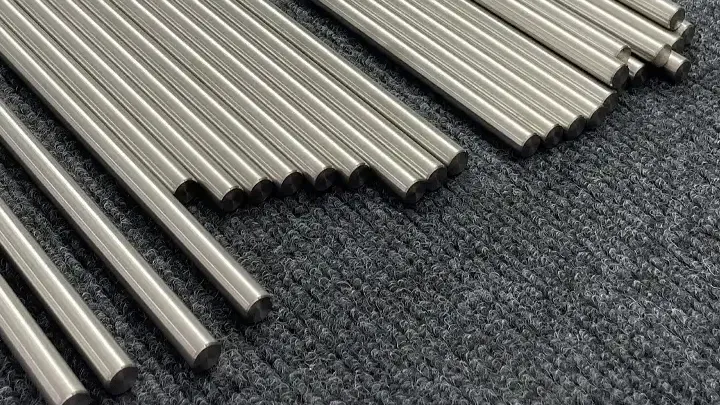
In its pure form, titanium exhibits a silvery-gray metallic appearance, similar to stainless steel but subtly darker and less reflective.
However, unlike many metals, titanium’s surface is never truly “bare.” The moment it is exposed to air, it forms a thin oxide layer (TiO₂). This oxide layer is:
Extremely stable
Transparent at nanoscale thickness
Responsible for titanium’s corrosion resistance
This means what we see is not pure titanium, but light interacting with its oxide layer.
Why Titanium Changes Color: The Science Explained
Titanium’s color variation is primarily driven by a phenomenon known as thin-film interference.
How It Works:
The oxide layer grows in thickness when exposed to heat or electrical current
Light reflects off both the top of the oxide layer and the underlying metal
These reflections interfere with each other, producing visible colors
Result:
Different oxide thicknesses create different colors without any pigments or dyes.
Oxide Thickness | Visible Color |
|---|---|
Thin (~20 nm) | Straw/Gold |
Medium | Purple/Blue |
Thick | Green |
Very Thick | Gray (opaque) |
This is why titanium can appear in vibrant hues—the color is structural, not chemical.
Types of Titanium Surface Colors
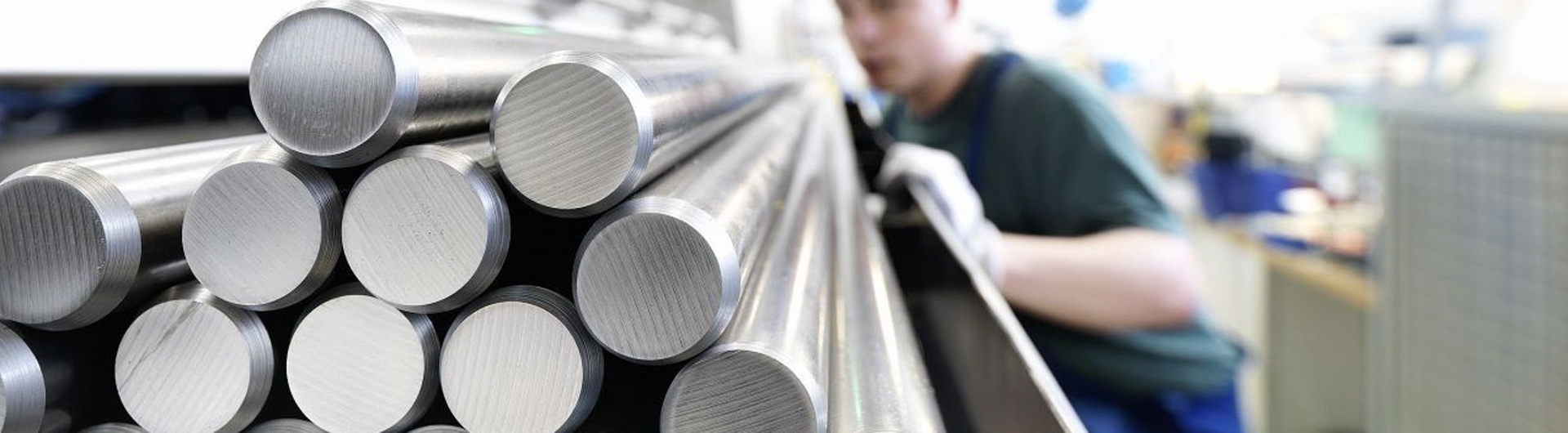
1. Mill Finish (Raw Titanium)
Appearance: Dull gray or matte silver
Process: As-produced, no additional treatment
Use Cases:
Aerospace structural components
Industrial fasteners
Raw material supply
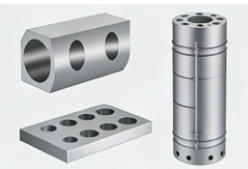
This is the most common form supplied in B2B manufacturing.
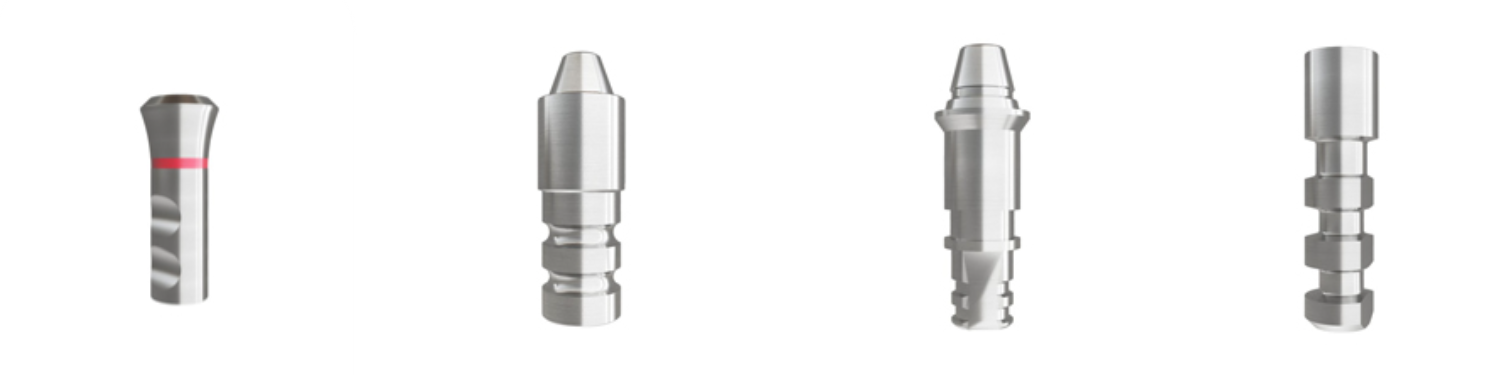
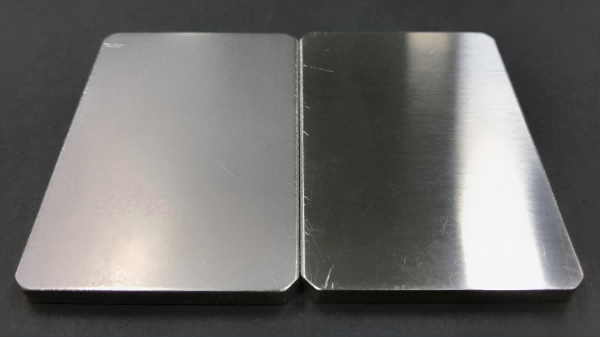
2. Polished Titanium
Appearance: Bright metallic silver with reflectivity
Process: Mechanical polishing or buffing
Advantages:
Improved surface smoothness
Reduced bacterial adhesion (medical use)
Applications:
Medical implants
Consumer electronics
Decorative hardware
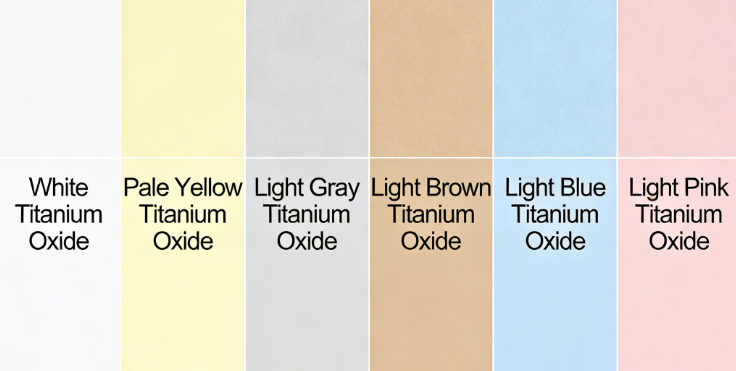
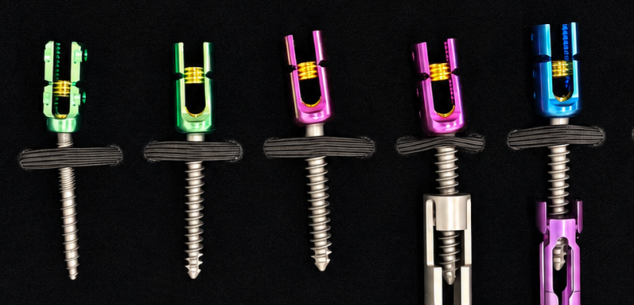
3. Anodized Titanium (Color Titanium)
Appearance: Blue, purple, gold, green, rainbow tones
Process: Electrochemical anodization
Key Feature:
No dyes involved
Color depends on voltage
Why industries use it:
Visual identification (e.g., surgical tools)
Branding differentiation
Corrosion resistance enhancement
4. Heat-Treated Titanium
Appearance: Iridescent (blue, violet, bronze)
Process: Controlled heating in air
Limitation:
Less precise color control than anodizing
Often seen in:
High-performance components
Exhaust systems
Experimental or custom parts
5. Sandblasted or Matte Titanium
Appearance: Uniform gray, non-reflective
Process: Abrasive blasting
Benefits:
Improved surface roughness
Better coating adhesion
Applications:
Medical implants (osseointegration)
Industrial parts
Titanium vs Other Metals: A Visual & Functional Comparison
Understanding titanium’s color becomes clearer when compared to other common engineering metals.
Property | Titanium | Stainless Steel | Aluminum |
|---|---|---|---|
Natural Color | Gray (darker) | Bright silver | Light silver |
Color Variability | High (anodizing) | Low | Medium (coating) |
Oxide Layer | Strong, stable | Moderate | Soft |
Corrosion Resistance | Excellent | Good | Moderate |
Key Insight:
Unlike stainless steel or aluminum, titanium’s color variations are intrinsic to its surface structure, not coatings. This makes it:
More durable
More stable over time
Ideal for long-term applications
Does Color Affect Titanium Performance?
This is a critical question for B2B buyers.
The short answer: Yes, but indirectly.
1. Oxide Thickness & Corrosion Resistance
Thicker oxide layers generally improve corrosion resistance
Anodized titanium often performs better in harsh environments
2. Surface Roughness
Matte or blasted surfaces improve:
Adhesion
Bone integration (medical use)
3. Identification & Traceability
Color coding helps:
Reduce assembly errors
Improve operational efficiency
Important Note:
Color itself does not weaken titanium—the underlying material properties remain unchanged.
Industrial Applications Where Titanium Color Matters
Medical Industry
Color-coded implants and tools
Enhanced biocompatibility
Reduced contamination risks
Aerospace
Heat-induced coloration used as inspection indicator
Surface condition reflects thermal exposure
Consumer Electronics
Premium aesthetics
Scratch resistance
Chemical Processing
Surface oxide indicates corrosion resistance capability
How Manufacturers Control Titanium Color
Producing consistent titanium color is not trivial—it requires precise process control.
Key Factors:
Voltage (for anodizing)
Temperature
Time
Surface preparation
Even slight variations can result in noticeable color differences.
Choosing the Right Titanium Finish for Your Application
For procurement professionals and OEM buyers, selecting the right finish is crucial.
Consider:
1. Functional Requirements
Corrosion resistance
Biocompatibility
Wear resistance
2. Aesthetic Needs
Branding
Product differentiation
3. Cost vs Value
Raw finish = lowest cost
Anodized/polished = higher value
A Practical Perspective for B2B Buyers
In real-world sourcing, titanium color is often an indicator of manufacturing capability.
A supplier that can:
Maintain consistent anodized colors
Control oxide thickness precisely
Deliver repeatable finishes
They are typically more advanced in process control and quality assurance.
Many experienced buyers evaluate titanium suppliers not only on price but also on:
Surface consistency
Batch uniformity
Custom finishing capabilities
This is particularly important in industries like medical devices, precision components, and high-end manufacturing, where surface integrity is critical.
Where Material Expertise Makes the Difference
In titanium production, achieving consistent color is not just about equipment—it’s about experience and process refinement.
Manufacturers with strong metallurgical expertise and production control systems are able to:
Deliver uniform finishes across large batches
Customize surface treatments for specific applications
Ensure compliance with international standards
For example, some specialized material manufacturers (such as SUNXIN ) focus heavily on surface engineering and titanium processing consistency, which allows them to support OEM clients requiring both performance and visual precision.
Rather than acting purely as raw material suppliers, these manufacturers often collaborate with clients on:
Surface treatment optimization
Application-specific finishing
Long-term supply consistency
This type of partnership can significantly reduce risk in B2B procurement.
Conclusion: Titanium’s Color Is More Than Appearance
Titanium’s “true color” is not a single shade—it is a dynamic expression of its surface chemistry and engineering potential.
From raw gray metal to vibrant anodized finishes, titanium offers:
Functional advantages
Aesthetic versatility
Long-term durability
For B2B buyers and engineers, understanding these variations provides a competitive edge—not only in product design but also in supplier selection.
In a market where quality differentiation is increasingly subtle, even something as simple as “color” can reveal a great deal about material integrity, process control, and manufacturing expertise.
FAQ Section
Q1: Is colored titanium painted or coated?
No. Titanium colors are typically created through anodizing, which changes the oxide layer thickness rather than adding paint or coatings.
Q2: Does anodized titanium fade over time?
No. Because the color is part of the oxide layer, it is highly stable and resistant to fading under normal conditions.
Q3: Which titanium color is strongest?
Strength is determined by the titanium grade (e.g., Grade 2, Grade 5), not its color.
Q4: Why does titanium turn blue when heated?
Heat increases oxide thickness, causing light interference that produces blue or purple hues.
Q5: Is colored titanium more expensive?
Yes, due to additional processing steps like anodizing and surface preparation.
Q6: Can titanium color be customized?
Yes. Anodizing allows precise color control based on voltage levels, though consistency requires advanced process control.
Final Thoughts
Titanium’s color is more than appearance—it reflects surface control, processing quality, and material performance.
For OEM buyers and engineers, understanding these details helps ensure better decisions in material selection and supplier evaluation.
In practice, consistency matters just as much as specification. Manufacturers with strong control over both titanium properties and surface finishing are better equipped to deliver reliable, repeatable results.
If you’re currently evaluating titanium for a project, a quick technical discussion around finishes, tolerances, and application requirements can often save time and reduce risk.
Ultimately, the true value of titanium lies not just in what you see—but in how precisely it’s made.