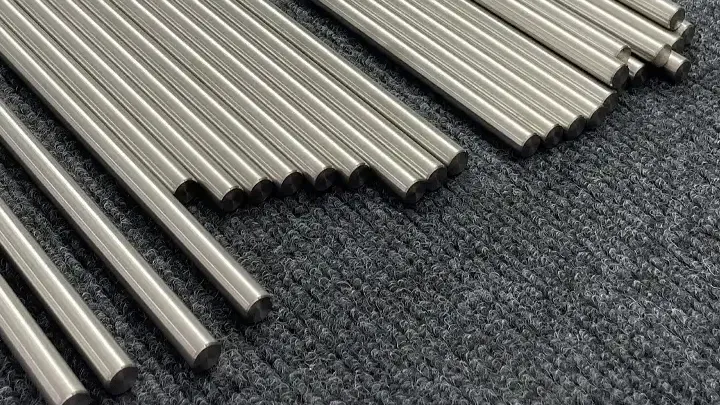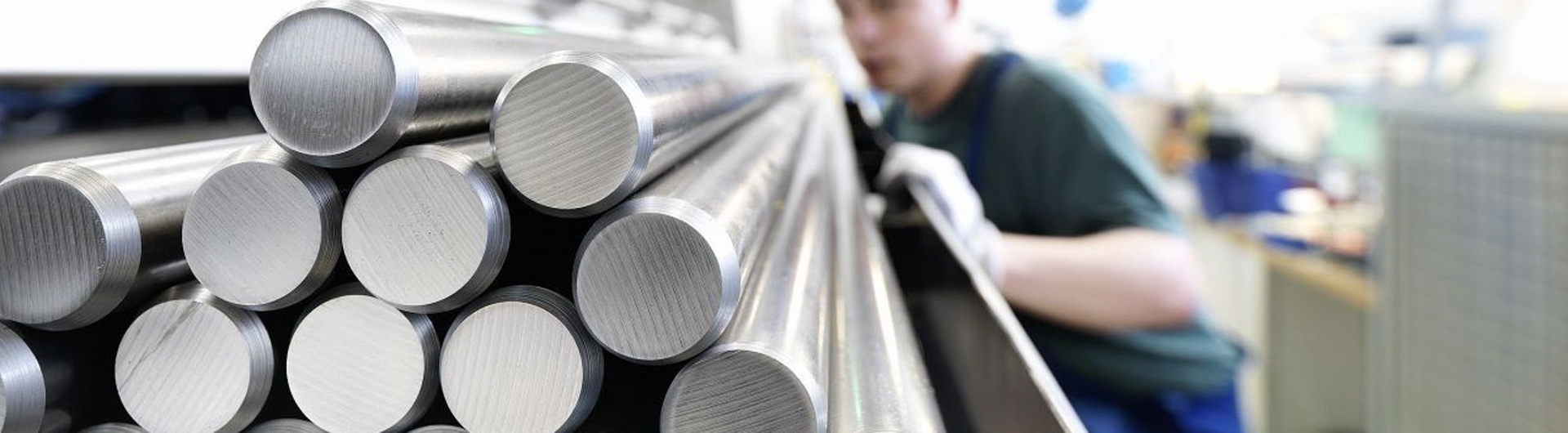

The short answer: titanium is not ferromagnetic, and an ordinary magnet will not stick to it. It is a paramagnetic metal, and only in a very strong magnetic field is it attracted extremely weakly — an effect that is virtually imperceptible in everyday use.
“If I touch it with a magnet, will it stick?”
— This is almost always the first question that procurement engineers and end users ask when they get their hands on titanium. The answer is not merely a piece of trivia; it directly determines whether an implantable device can go into an MRI scanner, whether a precision electronic component will interfere with a sensor, and even whether a shipment is genuine titanium at all.
Unfortunately, a great many articles online simply state that titanium is not magnetic and leave it at that, explaining neither the underlying physics nor a very real issue — why some titanium products do show a faint pull when a magnet is brought close. As a manufacturer with long-standing expertise in titanium and specialty alloys, we (SUNXIN) address this question thoroughly in this article.
1. Three Types of Magnetism: Sort Them Out Before Discussing Titanium
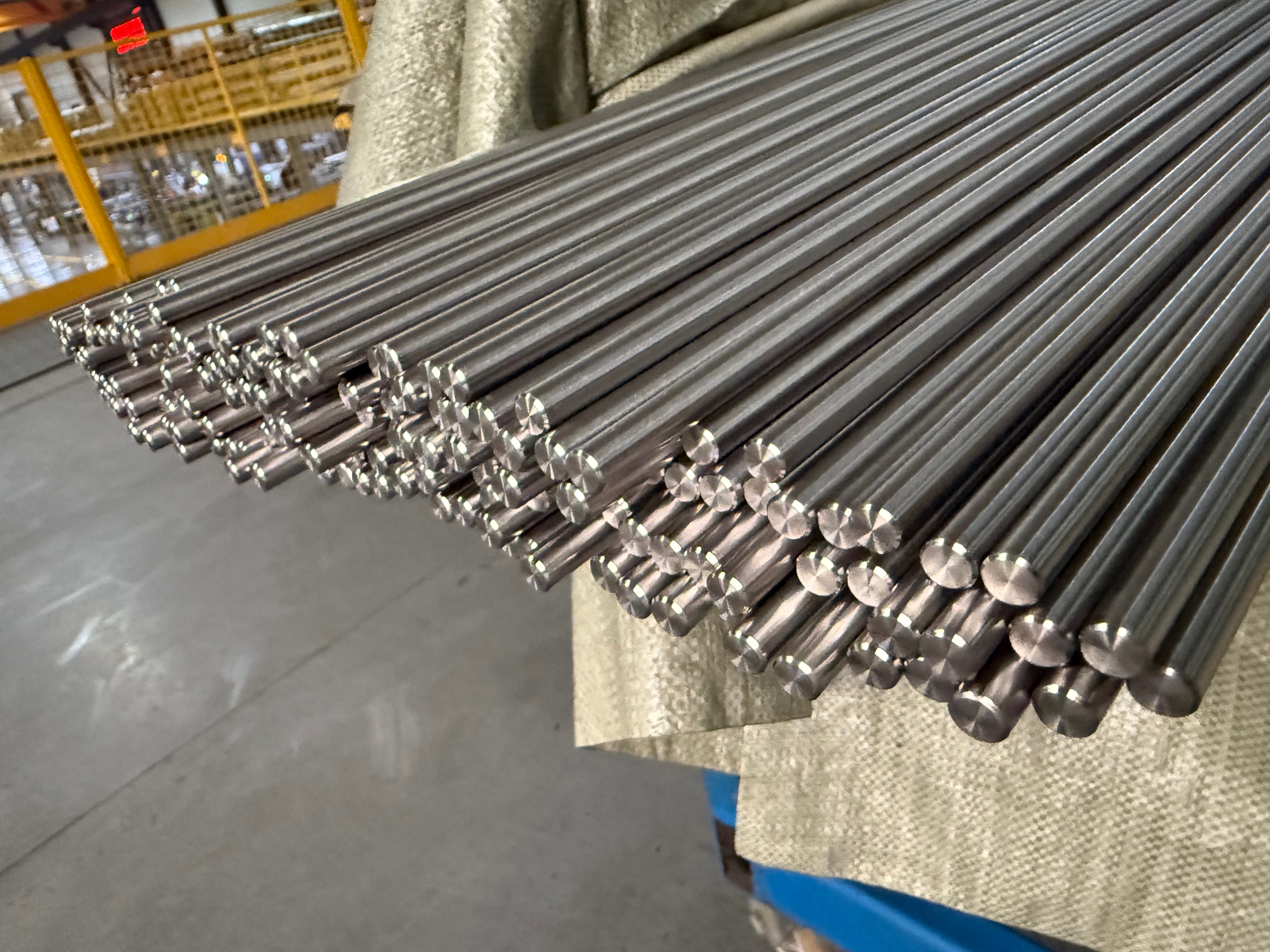
To truly understand the magnetism of titanium, you first need to know the three basic ways metals respond to a magnetic field:
Ferromagnetic: iron, cobalt, nickel, and most carbon steels and martensitic stainless steels. They are strongly attracted to a magnet, and can be magnetized and “remember” that magnetism.
Paramagnetic: titanium, aluminum, platinum, and others. They are attracted extremely weakly while a magnetic field is present; once the field is removed, the magnetism disappears immediately, leaving no residual magnetism.
Diamagnetic: copper, gold, water, and others. They are weakly repelled by a magnetic field.
Titanium belongs to the middle category — paramagnetic. Its atoms contain unpaired electrons that align slightly with an external magnetic field; however, the magnetic moments of neighboring atoms do not form the spontaneous, ordered arrangement found in iron (that is, there are no magnetic domains). As a result, titanium cannot develop strong magnetism on a macroscopic scale, nor can it retain magnetism once the field is removed.
2. Let the Data Speak: Just How “Non-Magnetic” Is Titanium?
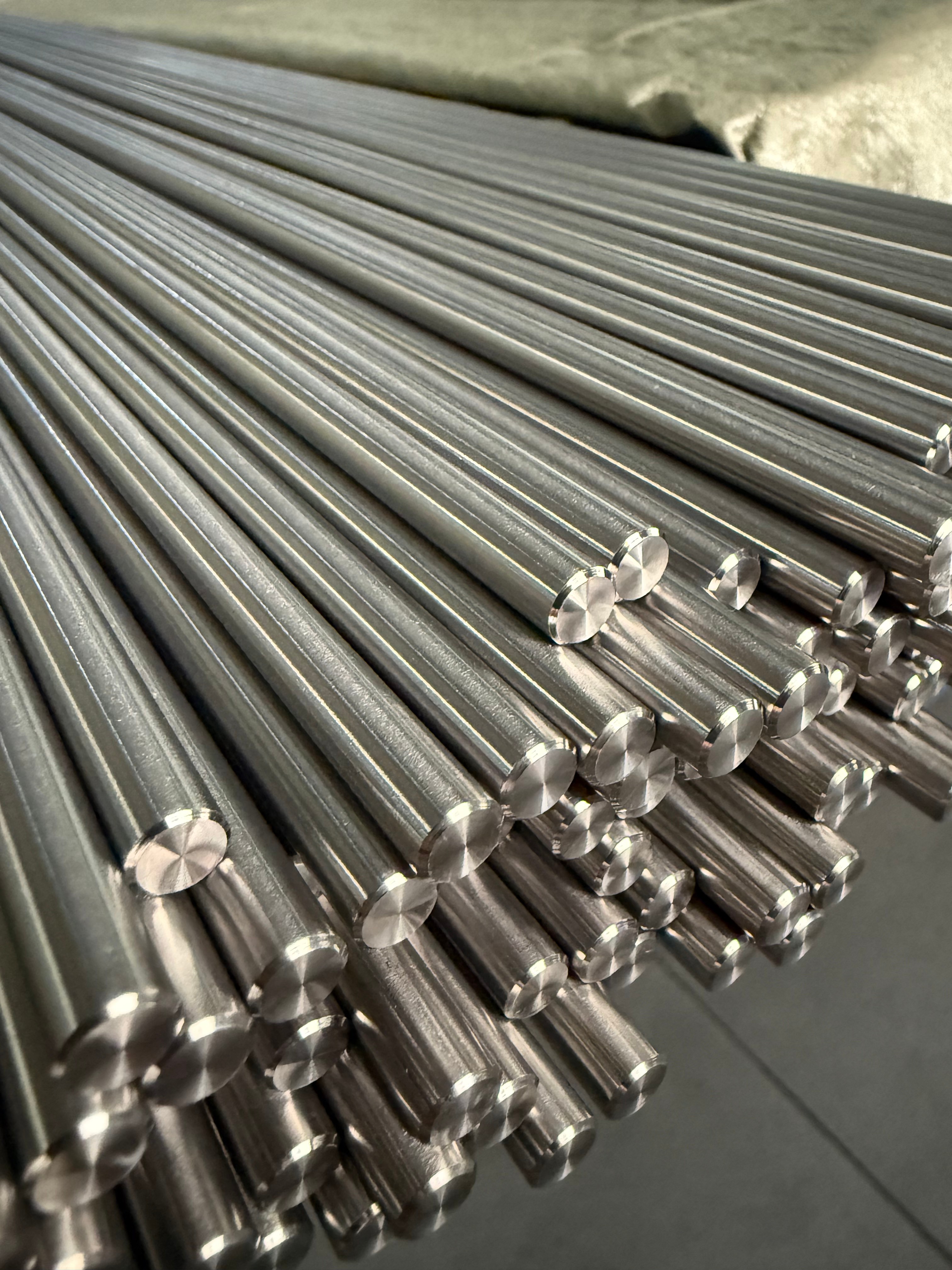
Replacing qualitative descriptions with numbers that engineers can verify makes the conclusion far more solid:
Relative permeability (μr): titanium and common titanium alloys are approximately 1.0002, virtually indistinguishable from the value of 1 for a vacuum. By comparison, the relative permeability of pure iron can reach thousands or even tens of thousands.
Volume magnetic susceptibility (χ): titanium is approximately 1.8×10⁻⁴, a very small positive value — “positive” indicates that it is paramagnetic rather than diamagnetic, and “very small” indicates that this degree of attraction is essentially negligible in engineering terms.
In other words, place titanium in a strong magnetic field and the force acting on it is so small that precision instruments are required to measure it. This is precisely why titanium comfortably meets the requirement when many specifications define “non-magnetic material” using a threshold of μr < 1.01 or < 2.0.
3. Does the Magnetism of Titanium Change Across Different Grades?
Many buyers worry: once aluminum, vanadium, or niobium is added, will the titanium alloy become magnetic?
The answer is no. Alloying elements change strength, toughness, and biocompatibility — not the fundamental magnetic nature of the material. As the industry consensus puts it: “titanium alloys are non-magnetic materials.”
By microstructure, titanium and titanium alloys fall into three major categories, and every one of them is non-magnetic:
Alpha and near-alpha types: for example, commercially Grade 1-Grade 4 and Ti-3Al-2.5V .
Alpha + beta types: for example, Ti-6Al-4V and Ti-6Al-7Nb — the category with the largest usage in medical and industrial applications.
Beta and near-beta types: for example, Ti-15Mo and Ti-2448.
The table below summarizes the key properties and magnetism of common grades:
Chinese Grade | International Grade / UNS | Type | Density (g/cm³) | Elastic Modulus (GPa) | Tensile Strength (MPa) | Magnetism |
TA1G–TA4G | CP Titanium Grade 1–4 | α (pure titanium) | 4.51 | 102–105 | 280–690 | Non-magnetic |
TA18 | Ti-3Al-2.5V | Near α | 4.47 | 102–105 | 860–1000 | Non-magnetic |
TC4 | Ti-6Al-4V / R56400 | α+β | 4.42 | 110–114 | 930–1200 | Non-magnetic |
TC4 ELI | Ti-6Al-4V ELI / R56401 | α+β (extra-low interstitial) | 4.43 | 101–110 | 896–1100 | Non-magnetic |
TC20 | Ti-6Al-7Nb / R56700 | α+β | 4.52 | 114 | 930–1300 | Non-magnetic |
In terms of hardness, commercially pure titanium is approximately HV10 ≥120–200, while Ti-6Al-4V is approximately HV10 ≥260, rising with the grade and with higher interstitial element content — but no matter how strength and hardness change, the magnetism remains unchanged.
Whether it is Grade 5 , the most widely used grade; Grade 23 , the first choice for implants; or the vanadium-free Ti-6Al-7Nb , all are non-magnetic materials and can be safely used in non-magnetic and MRI-related applications.
4. Side-by-Side Comparison: Titanium vs. Other Common Metals
“Isn't stainless steel non-magnetic too?” is the easiest misconception to fall into. Comparing titanium with similar materials makes the differences immediately clear:
Metal | Type of Magnetism | Relative Permeability (approx.) | Attracted by a Magnet? |
Titanium / titanium alloys | Paramagnetic | ≈ 1.0002 | No |
316 / 316L austenitic stainless steel (annealed) | Essentially non-magnetic | ≈ 1.005–1.05 | Essentially no; may be slight after cold working |
440C / 420 martensitic stainless steel | Ferromagnetic | Very high | Yes |
17-4PH precipitation-hardening stainless steel | Ferromagnetic | Relatively high | Yes |
Cobalt-chromium alloys (L605 / MP35N) | Essentially non-magnetic | ≈ 1 | No |
Nickel-titanium alloy (Nitinol) | Essentially non-magnetic (paramagnetic) | ≈ 1.002 | No |
Aluminum | Paramagnetic | ≈ 1 | No |
Carbon steel / pure iron | Ferromagnetic | Hundreds to thousands | Yes |
The key point is this: “stainless steel = non-magnetic” is a common misunderstanding. Only austenitic grades (such as 304 and 316) come close to being non-magnetic in the annealed condition, and even then cold working may induce martensitic transformation and impart slight magnetism; martensitic and ferritic grades (440C, 420, 17-4PH), meanwhile, are outright ferromagnetic materials that a magnet will hold firmly. This is the fundamental reason why many demanding non-magnetic applications choose titanium over stainless steel — titanium's non-magnetic behavior does not depend on its condition, is unaffected by cold working, and is inherently stable.
5. Why “Non-Magnetic” Is So Attractive to B2B Customers
For buyers, the non-magnetic nature of titanium is not an abstract parameter but a selling point that solves problems directly:
MRI compatibility (the classic case): in a magnetic resonance imaging environment, titanium experiences no magnetic force, does not migrate, and produces minimal imaging artifacts. This is one of the key reasons titanium (especially Grade 23 ELI) is widely used in orthopedic, dental, and craniomaxillofacial implants — patients can still safely undergo MRI examinations after implantation.
Precision electronics and sensing: non-magnetic materials will not interfere with Hall sensors, magnetometers, compasses, precision balances, and other devices sensitive to magnetic fields.
Aerospace and defense: structural parts near compasses, non-magnetic fasteners, and components around mine-clearing/detection equipment all require materials that are inherently non-magnetic.
Marine and scientific instruments: for magnetometer probes and the supports and housings of geomagnetic observation equipment, titanium avoids magnetic contamination of measurement results.
It is worth noting that being non-magnetic is only one of titanium's combined advantages: its density is only about 4.4–4.5 g/cm³, half that of stainless steel and cobalt-chromium-molybdenum (CoCrMo) alloys; at the same time, it offers excellent biocompatibility, and its surface spontaneously forms a stable, dense titanium dioxide (TiO₂) passive film, giving outstanding corrosion resistance. It is precisely this combination — non-magnetic + lightweight + biocompatible + corrosion-resistant — that makes titanium virtually irreplaceable for MRI-compatible implants.
6. So Why Do Some Titanium Parts “Test” as Magnetic?
This is the point most articles avoid, yet it is what confuses customers most. The truth is: usually it is not the titanium itself that is magnetic, but rather titanium that has been “contaminated” or “counterfeited.” There are three common scenarios:
Iron contamination during processing (the most common): if titanium is handled with tooling, fixtures, or wire brushes that have previously been used on carbon steel, free iron particles become embedded in the surface. What the magnet attracts is in fact that iron, not the titanium. The solution is pickling + passivation to remove free iron, which is also standard practice for medical and high-end industrial parts.
Passing off inferior material: using magnetic stainless steel in place of titanium. “Titanium” that is clearly attracted by a magnet may not be titanium at all.
Contamination introduced by welding or heat treatment: improper processes may introduce iron-bearing impurities.
Therefore, the saying “just use a magnet and you'll know whether the titanium is good” is not rigorous — it can only help you rule out obvious ferromagnetic counterfeits, and cannot prove that the material actually meets specification. The truly reliable approach is to purchase from a supplier that can provide complete material certificates, chemical composition and magnetic permeability reports, and full traceability. That is also why we insist on including quality inspection documents with every batch of titanium we ship. Within the standards system for surgical implants (such as ASTM F67 / F136, the ISO 5832 series, and GB/T 13810), these titanium grades are themselves non-magnetic materials; requiring material certification to the corresponding standard at the time of purchase ensures both magnetic compliance and confirmation that composition and mechanical properties meet requirements.
7. How to Test the Magnetism of Titanium Scientifically
If you need to formally verify whether a batch of titanium meets non-magnetic requirements, you can choose from the following methods in order of increasing precision:
Preliminary magnet check: this can only roughly rule out iron contamination or counterfeit material, and cannot serve as an acceptance criterion.
Magnetic permeability measurement: in accordance with ASTM A342, using a low-permeability indicator (such as a Severn / Low-Mu Gauge) for on-site determination, commonly with μr < 1.01 or < 2.0 as the non-magnetic acceptance line.
Magnetic susceptibility measurement: precise laboratory determination using instruments such as a vibrating sample magnetometer (VSM), suitable for the most demanding scientific and medical applications.
Composition and grade verification: cross-check the chemical composition against the material certificate to confirm the authenticity of the material at the source.
Frequently Asked Questions (FAQ)
Q1 : Can a magnet attract titanium?
No. Titanium is a paramagnetic metal, and an ordinary magnet cannot attract it. If your “titanium part” is clearly attracted, either there is iron contamination on the surface or it is not titanium at all.
Q2 : Are titanium rings, titanium eyeglasses, and titanium watches magnetic?
No. Everyday titanium products are not magnetic and cannot be magnetized; long-term wear will not cause them to “build up” magnetism.
Q3 : Can titanium implants safely enter an MRI scanner?
Yes. Titanium experiences no force and does not migrate in a magnetic field, and produces minimal imaging artifacts. It is the representative MRI-compatible implant material, which is one of the reasons titanium is widely adopted in orthopedics and dentistry.
Q4 : For non-magnetic applications, should I choose titanium or 316 stainless steel?
If you require strict and stable non-magnetic performance, choose titanium first. 316 is only close to non-magnetic in the annealed condition and may acquire slight magnetism after cold working; titanium's non-magnetic behavior is unaffected by processing condition, making it more reliable.
Q5 : My titanium part is slightly attracted by a magnet — is it fake?
Not necessarily. The more common cause is free iron embedded in the surface during processing, which can be eliminated by pickling and passivation. However, if it is clearly attracted, you should be alert to the possibility of stainless steel being passed off as titanium, and we recommend checking the material certificate.
Q6 : Are titanium alloys (such as Ti-6Al-4V) more magnetic than pure titanium?
No. Alloying elements such as aluminum, vanadium, and niobium change strength and toughness, not the fundamental magnetic nature; the magnetic permeability of pure titanium and titanium alloys is essentially the same.
Conclusion
Titanium's “non-magnetic” character is not a slogan, but a stable property determined by its paramagnetic nature and unchanged by processing condition — which is exactly why it is irreplaceable in MRI, precision electronics, aerospace, and similar applications. In reality, cases where titanium “appears to be magnetic” almost all stem from surface iron contamination or inferior material passed off as titanium, and they ultimately point to the same thing: the authenticity and traceability of the material.
So rather than agonizing over “whether a magnet will stick,” it is better to get three things right in material selection and acceptance:
Check the standard: confirm the material standard corresponding to the grade (such as ASTM F136 / F67, the ISO 5832 series, and GB/T 13810); these standards themselves require the material to be non-magnetic.
Ask for documentation: obtain from your supplier complete material certificates and chemical composition and magnetic permeability reports, rather than relying on a preliminary magnet check alone.
Select according to need: titanium is not the only solution — if your application does not demand high strength and is cost-sensitive, annealed 316L can also meet some non-magnetic requirements; but if you are after stable non-magnetic performance, light weight, and biocompatibility, titanium (especially Grade 23 ELI) is usually more reliable.
If you are selecting materials for a non-magnetic or MRI-related project and need to compare the composition, mechanical properties, and magnetic permeability data of specific grades, you are welcome to consult the titanium material selection resources we have compiled, or simply talk to us about your application requirements.
Related News
-
 IntroductionIf you manufacture dental implants, orthopedic implants, trauma systems, surgical instruments, or other medical devices, choosing the right titanium supplier is one of the most important purchasing decisions you will make.Medical titanium is not just another industrial metal. It directly
 -
 Understanding China's Titanium Bar Industry and How to Evaluate the Right SupplierChina has become one of the world's largest producers and exporters of titanium materials. From aerospace and medical implants to chemical processing equipment and industrial machinery, Chinese titanium bars are now us