
Introduction
The reliability of medical devices depends entirely on the materials used in their manufacture. Whether producing dental implants, orthopedic implants, trauma treatment systems, cardiovascular devices, or surgical instruments, selecting the right medical-grade metal supplier directly impacts product quality, regulatory compliance, production efficiency, and the company’s long-term success.
Unlike industrial metals, medical-grade materials are subject to far stricter requirements. Every batch of material must demonstrate excellent biocompatibility, stable mechanical properties, consistent chemical composition, and complete traceability. In many cases, manufacturers also require suppliers to comply with internationally recognized standards such as ASTM, ISO 5832, AMS, or EN.
Today, the procurement of medical metal materials has become more globalized than ever before. Buyers may source titanium from the United States, cobalt-chromium alloys from Europe, stainless steel from Japan, or precision-machined medical-grade bars from China. Each region offers distinct advantages in terms of manufacturing capabilities, certifications, lead times, pricing, and customization services.
However, finding the right supplier is not simply a matter of choosing the largest company or the lowest-priced supplier. The best supplier should be able to meet your production needs, quality expectations, and long-term supply strategy.
This guide introduces ten renowned suppliers serving the global medical industry. Rather than ranking them solely by company size, we’ve taken a buyer’s perspective to comprehensively evaluate their product range, manufacturing capabilities, strengths, and ideal application scenarios.
Whether you’re an OEM manufacturer, medical distributor, implant producer, or procurement manager, this guide will help you better understand the current landscape of medical metal supply.

Why Choosing the Right Medical Metal Supplier Is Critical
Medical manufacturers typically spend months validating new suppliers, as changes in raw materials can impact every stage of production—from machining and heat treatment to regulatory approvals and final product performance.
Qualified suppliers offer far more than just certified metals.
They should also provide:
Stable chemical composition
Consistent mechanical properties
Complete heat treatment traceability
Medical-grade documentation
Reliable delivery schedules
Technical support during the qualification process
Long-term production stability
Poor material consistency can increase processing costs, reduce the fatigue performance of implants, and even delay product registration.
For OEM manufacturers producing thousands of implants each month, supplier reliability is often more important than securing the absolute lowest purchase price.
How We Screen These Suppliers
This list is based on multiple practical procurement criteria, rather than solely on company size.
We evaluate suppliers based on the following criteria:
1. Experience in the medical industry
Companies with a long history of serving implant and medical device manufacturers typically have more robust quality systems and a stronger understanding of regulatory requirements.
2. Product portfolio
The ability to supply a wide range of medical alloys—including titanium, stainless steel, cobalt-chromium alloys, nickel-titanium alloys, and specialty alloys—provides buyers with greater procurement flexibility.
3. Quality Certifications
We give priority to suppliers that comply with the following internationally recognized standards:
ASTM F67
ASTM F136
ASTM F138
ASTM F75
ISO 5832 series
AMS specifications
4. Manufacturing Capabilities
Advanced melting technologies, such as:
Vacuum Induction Melting (VIM)
Vacuum Arc Remelting (VAR)
Electroslag Remelting (ESR)
help ensure a purer microstructure and more stable performance.
5. Global Supply Capabilities
Reliable international logistics, export experience, multilingual support, and flexible production capacity collectively enhance a supplier’s competitiveness.
Top 10 Global Suppliers of Medical Metal Materials
1. Carpenter Technologies (U.S.)

Among global medical alloy suppliers, Carpenter Technologies is widely recognized for producing high-end specialty alloys for demanding medical applications.
Its medical product portfolio includes:
Titanium alloys
Stainless steel
Cobalt-chromium alloys
MP35N
Custom engineered alloys
The company has decades of experience serving the orthopedic implants, cardiovascular devices, trauma systems, and surgical instruments sectors.
Its key strengths lie in advanced metallurgical processes and material consistency, making Carpenter the supplier of choice for manufacturers of high-value implant systems—where product performance is critical.
However, exceptional quality often comes at a higher price, so Carpenter is best suited for companies that prioritize long-term quality over cost reduction.
Best Suited For:
Orthopedic implant manufacturers
High-end OEMs
Medical device innovators
2. ATI (Allegheny Technologies Inc.) (United States)

ATI is one of the world’s leading producers of specialty titanium and advanced alloys.
Its medical materials are widely used in:
Dental implants
Hip implants
Bone screws
Spinal fixation systems
Surgical instruments
ATI is particularly renowned for producing high-quality titanium that complies with ASTM F67 and ASTM F136 standards.
Its robust R&D capabilities enable it to continuously develop advanced medical alloys with superior fatigue resistance and machinability.
Companies developing next-generation implant systems typically list ATI as one of their preferred raw material partners.
3. VSMPO-AVISMA (Produced in Kazakhstan/Russia, supplied globally)

VSMPO has historically been one of the world’s largest titanium producers.
Its titanium products serve the aerospace, medical, and industrial sectors.
Medical manufacturers value the company for:
Excellent metallurgical processes
Extensive production capacity
Consistent titanium product quality
Global distribution network
The company supplies titanium bars, billets, forgings, and semi-finished products to implant manufacturers worldwide.
Although geopolitical factors have influenced procurement decisions in recent years, VSMPO remains a key player in the global titanium supply chain.
4. Sandvik Materials Technology (Sweden)

Sandvik has established an outstanding reputation in the field of precision stainless steel and specialty alloys.
Its medical products are widely used in:
Surgical instruments
Medical tubing
Orthopedic devices
Dental instruments
Sandvik’s precision manufacturing and dimensional consistency make it highly attractive to companies requiring high-performance stainless steel bars and tubing.
Its products typically feature excellent surface finish and machinability, helping manufacturers reduce secondary processing costs.
5. Nippon Yakin Kogyo (Japan)

Japanese manufacturers are renowned for their process control and material consistency, and Nippon Yakin Kogyo is no exception.
Its medical-grade stainless steel and nickel-based alloys are supplied to manufacturers with extremely high requirements for production quality stability.
The company’s strengths include:
Strict chemical composition control
Exceptional cleanliness
High dimensional accuracy
Reliable long-term quality
Although production costs may be higher than those of some Asian competitors, many buyers value the predictable quality and low defect rates associated with Japanese manufacturing.
6. Böhler Edelstahl (Austria)

When discussing high-end stainless steel for medical applications, Böhler Edelstahl rightfully belongs on the list of global suppliers. With decades of metallurgical expertise, the company is renowned for producing high-performance stainless steels used in surgical instruments, orthopedic tools, dental equipment, and precision medical components.
Its product portfolio includes martensitic, austenitic, and precipitation-hardening stainless steels, which offer an excellent balance between hardness, corrosion resistance, and machinability.
Many manufacturers choose Böhler precisely because of its rigorous quality control and consistent performance across batches. For original equipment manufacturers (OEMs) producing regulated medical products, these characteristics are particularly valuable, as material consistency directly impacts product validation.
Core Advantages
Production of high-purity stainless steel
A reputation for quality that is renowned throughout Europe
Exceptional consistency in mechanical properties
Suitable for precision machining
Best Suited For
Surgical instrument manufacturers
Dental instrument manufacturers
Original equipment manufacturers (OEMs) of precision medical components
7. Aubert & Duval (France)

Aubert & Duval has long been recognized as a producer of specialty alloys for the aerospace, energy, and medical industries. Its extensive experience in vacuum melting technology makes it a reliable supplier of high-performance medical alloys.
The company produces titanium alloys, stainless steels, nickel alloys, and cobalt-based materials for demanding implant applications.
One of Aubert & Duval’s strengths lies in its expertise in producing materials with extremely low impurity levels, which helps manufacturers enhance the materials’ fatigue performance and long-term reliability.
For orthopedic implant manufacturers, material purity is often more important than price, making companies like Aubert & Duval valuable long-term partners.
Core Strengths
Advanced smelting technology
Exceptional material purity
Extensive experience in specialty alloys
High-performance implant materials
8. Daido Special Steel (Japan)

Daido Special Steel is another highly regarded Japanese manufacturer serving the medical industry through the production of precision stainless steel.
Japanese steel manufacturers are widely praised for maintaining consistent production processes over decades, and Daido Special Steel is no exception.
Its medical materials are widely used in:
Surgical scissors
Forceps
Bone saws
Medical cutting tools
Precision orthopedic instruments
Daido Special Steel places greater emphasis on metallurgical processes and production stability rather than offering the broadest product range. For manufacturers seeking repeatable machining performance, this approach reduces production variability and improves yield rates.
9. SUNXIN Metal (China)

Over the past decade, China has become an increasingly important source of medical-grade metal materials. Improvements in manufacturing technology, quality management, and international certifications have enabled qualified Chinese manufacturers to compete with established suppliers from Europe, Japan, and North America.
Among these manufacturers, SUNXIN has earned a strong reputation for supplying medical-grade metal materials to global OEMs, distributors, and medical device companies.
SUNXIN does not focus on bulk metals but specializes in materials designed for medical and high-precision applications.
Its product portfolio includes:
Titanium Grades 1–4
Ti-6Al-4V (Grade 5)
Ti-6Al-4V ELI (Grade 23)
Medical-grade stainless steel
316LVM
420A
420B
420C
440A
440C
630 (17-4PH)
631 (17-7PH)
S465
455
MP35N
CoCrMo alloys
NiTi alloys
The company supplies bars, rods, sheets, discs, tubes, and custom-sized products to manufacturers of dental implants, orthopedic implants, surgical instruments, trauma systems, and minimally invasive medical devices.
One of SUNXIN’s key competitive advantages is its flexibility. While some large international steel mills primarily serve customers with massive procurement volumes, many growing OEM manufacturers require smaller batches, custom dimensions, and faster response times.
Through flexible production planning, technical communication, and export experience, Sunxin is positioned to support these customers.
This combination is particularly attractive to buyers seeking a balance between quality, responsiveness, and cost-effectiveness.
Many OEM manufacturers no longer rely solely on traditional European and American suppliers but are incorporating qualified Chinese suppliers, such as Sunxin, into their certified supplier networks to enhance supply chain resilience and reduce procurement risks.
10. Outokumpu (Finland)

Outokumpu is internationally renowned for its expertise in stainless steel.
Although most of its products serve the industrial sector, certain grades are widely used in medical devices, laboratory instruments, and surgical instruments.
The company has invested heavily in sustainable steel production, making it highly attractive to manufacturers that place greater emphasis on environmental responsibility.
For medical companies developing ESG procurement strategies, sustainability is increasingly becoming a key consideration in supplier selection, alongside quality and cost.
Top 10 Supplier Comparison
Supplier | Main Materials | Global Reputation | Customization | Best For |
|---|---|---|---|---|
Carpenter Technology | Titanium, CoCr, Stainless Steel | ★★★★★ | ★★★ | Premium implant manufacturers |
ATI | Titanium Alloys | ★★★★★ | ★★★ | Orthopedic & dental implants |
VSMPO | Titanium | ★★★★★ | ★★ | Large titanium sourcing |
Sandvik | Stainless Steel | ★★★★★ | ★★★ | Surgical instruments |
Nippon Yakin | Stainless Steel | ★★★★☆ | ★★★ | Stable OEM production |
Böhler Edelstahl | Stainless Steel | ★★★★★ | ★★★ | Precision medical tools |
Aubert & Duval | Specialty Alloys | ★★★★★ | ★★★ | High-performance implants |
Daido Steel | Stainless Steel | ★★★★☆ | ★★★ | Precision machining |
Titanium, Stainless Steel, CoCrMo, NiTi | ★★★★☆ | ★★★★★ | Flexible OEM sourcing | |
Outokumpu | Stainless Steel | ★★★★☆ | ★★★ | Medical equipment |
Why More and More Medical Device Companies Are Expanding Their Supplier Base
Five years ago, many manufacturers preferred to source all raw materials from a single supplier. Today, this strategy is becoming increasingly rare.
The COVID-19 pandemic, logistics disruptions, and fluctuations in raw material prices have exposed the risks of relying on a single source.
As a result, many OEM manufacturers now screen multiple qualified suppliers across different regions. This diversification strategy enhances supply chain resilience, shortens lead times, and provides greater flexibility as market conditions change.
China has become an increasingly important component of this strategy. While high-end suppliers from Europe and the United States still dominate certain high-end application areas, certified Chinese manufacturers are now able to offer highly competitive alternatives for many medical-grade materials—particularly when customers require custom dimensions, shorter production cycles, or more flexible order quantities.
How to Choose the Right Medical-Grade Metal Supplier
Selecting a supplier is about much more than simply comparing prices.
A reliable supplier should demonstrate consistent performance across several key areas.
1. Material Certification
Verify that the supplier can provide material certifications that meet the standards required for your application, such as ASTM F67, ASTM F136, ASTM F138, ASTM F75, or the ISO 5832 series of standards.
2. Traceability
Every batch of products should be fully traceable from raw material smelting through final inspection. Comprehensive documentation simplifies the audit process and helps ensure compliance with regulatory requirements.
3. Manufacturing Processes
Understand the manufacturing process for the materials. Compared to traditional smelting methods, processes such as VIM, VAR, and ESR typically produce a cleaner microstructure and more stable mechanical properties.
4. Dimensional Control Capabilities
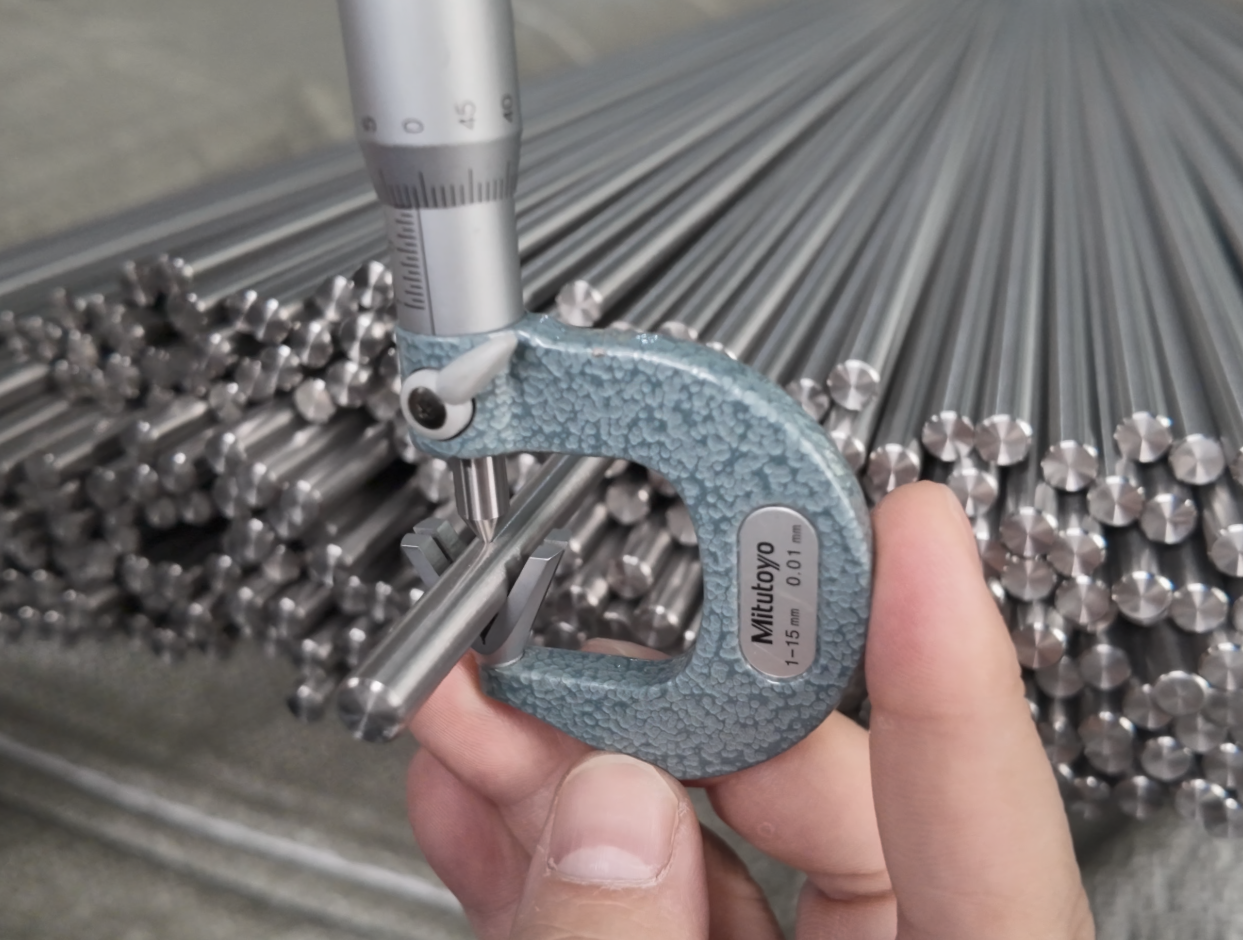
If your project requires non-standard diameters, thin-walled tubing, or custom-cut billets, evaluate whether the supplier can manufacture to your precise specifications without extending lead times.
5. Technical Support
Suppliers with expertise in medical applications can typically provide valuable advice on material selection, processing characteristics, and certification requirements, thereby helping to shorten development cycles.
6. Long-Term Reliability
Medical device development is a long-term investment. Suppliers with stable production capacity and a proven track record of exports are more likely to support your business as demand grows.
Frequently Asked Questions (FAQ)
1. What are the most commonly used materials in medical implants?
Titanium alloys, medical-grade stainless steel, cobalt-chromium alloys, and nickel-titanium alloys are the most widely used materials due to their excellent biocompatibility, corrosion resistance, and mechanical strength.
2. Why is Titanium Grade 23 (Ti-6Al-4V ELI) the preferred choice for implants?
Titanium Grade 23 (Ti-6Al-4V ELI) has a lower oxygen content than Titanium Grade 5, resulting in better toughness and fatigue resistance, making it suitable for long-term implant applications.
3. What is the difference between 316L and 316LVM?
316LVM is produced using a vacuum melting process, which results in higher purity and lower inclusion levels, making it more suitable for implantable medical devices.
4. Are medical metal suppliers in China reliable?
Many Chinese suppliers have significantly improved their manufacturing capabilities and quality systems. Buyers should evaluate certification status, traceability, export experience, and quality management rather than judging suppliers solely based on their country of origin.
5. What certifications should medical metal suppliers provide?
Common certifications include ISO 13485 supporting documentation, ISO 9001, ASTM material certifications, EN 10204 3.1 certificates, and complete material traceability records.
6. Can a single supplier provide all medical alloys?
Some suppliers offer a comprehensive product portfolio, while others specialize in specific material series. Purchasers should determine whether a single-source or multi-source strategy best suits their supply chain.
7. What factors influence the pricing of medical metals?
Material grades, smelting techniques, dimensions, order quantities, processing requirements, inspection standards, and market conditions all influence pricing.
8. How important is material purity?
It is extremely important. Higher-purity materials typically improve fatigue performance, corrosion resistance, and the long-term reliability of implants.
9. Should buyers always choose the largest supplier?
Not necessarily. While large suppliers possess strong technical capabilities, mid-sized manufacturers may offer greater flexibility, shorter lead times, and more personalized service.
10. What requirements should buyers establish before approving a new supplier?
Typical requirements include material certificates, chemical composition reports, mechanical property test reports, dimensional inspection records, traceability documentation, and sample materials for qualification testing.
11. Is it beneficial to qualify multiple suppliers?
Yes. A multi-supplier strategy can reduce procurement risks, enhance bargaining power, and ensure supply continuity in the event of production or logistics disruptions at a single supplier.
12. What is the biggest mistake buyers make when selecting suppliers?
Focusing solely on price. Total life-cycle cost also includes material consistency, machinability, lead times, quality stability, documentation, and long-term support.
Conclusion
The global medical metal materials market continues to evolve as manufacturers pursue higher quality, greater supply chain resilience, and increased flexibility. While established manufacturers in the U.S., Europe, and Japan remain key partners, certified manufacturers in China are increasingly contributing to the industry’s global supply network.
Ultimately, no single supplier can be the “best” choice for every project. The right choice depends on your product requirements, regulatory requirements, production volume, budget, and long-term procurement strategy.
For OEM manufacturers and medical device companies evaluating new supply partners, the focus should not be solely on brand recognition. You should also assess their technical capabilities, quality consistency, responsiveness, and ability to support your business over the long term.
Whether you need implant-grade titanium, medical-grade stainless steel, cobalt-chromium alloys, or custom semi-finished materials, partnering with a supplier that can guarantee reliable quality while offering flexible manufacturing capabilities will help enhance production efficiency and long-term competitiveness.