
Introduction: Why Carbon Content Matters More Than Most Buyers Realize
In the world of implant-grade materials, CoCr28Mo (Cobalt-Chromium-Molybdenum alloy) is often treated as a single category. Buyers request it, suppliers quote it, and parts are manufactured—sometimes without a deeper discussion about one critical variable: carbon content.
Yet carbon—typically present in fractions of a percent—plays a decisive role in wear resistance, corrosion behavior, mechanical strength, and manufacturability. The difference between low carbon and high carbon CoCr28Mo is not merely academic; it directly impacts implant longevity, regulatory compliance, and ultimately, patient outcomes.
For B2B buyers sourcing bars, rods, or custom-machined components, understanding this distinction is essential for making informed procurement decisions.
Understanding CoCr28Mo: A Quick Technical Foundation
CoCr28Mo alloys are widely used in orthopedic and dental implants, particularly for:
Joint replacements (hip and knee)
Dental prosthetics and frameworks
Surgical tools requiring high wear resistance
The alloy typically consists of:
Cobalt (Co): Base metal, provides strength and biocompatibility
Chromium (Cr ~27–30%): Enhances corrosion resistance
Molybdenum (Mo ~5–7%): Improves strength and pitting resistance
Carbon (C): The key differentiator in this discussion
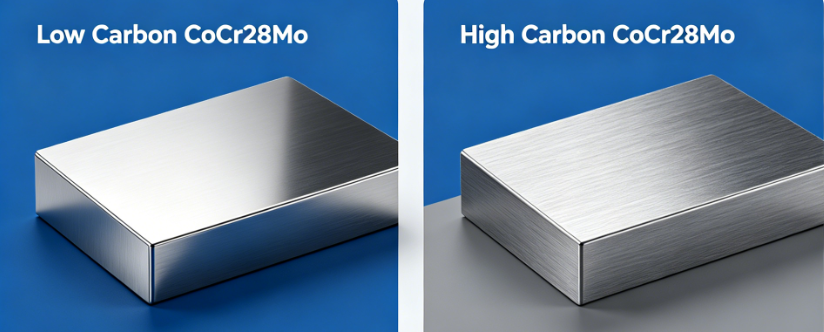
Carbon content generally defines two major categories:
Type | Carbon Content |
|---|---|
Low Carbon CoCr28Mo | ≤ 0.08% |
High Carbon CoCr28Mo | 0.15% – 0.30% |
This seemingly small variation significantly changes the alloy's microstructure and performance.
Microstructure Differences: The Real Source of Performance Variation
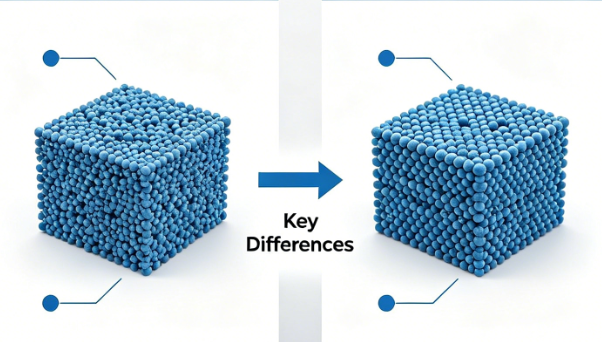
The fundamental difference lies in carbide formation.
Low Carbon CoCr28Mo
Minimal carbide precipitation
More uniform matrix structure
Higher ductility
Better resistance to corrosion in dynamic environments
High Carbon CoCr28Mo
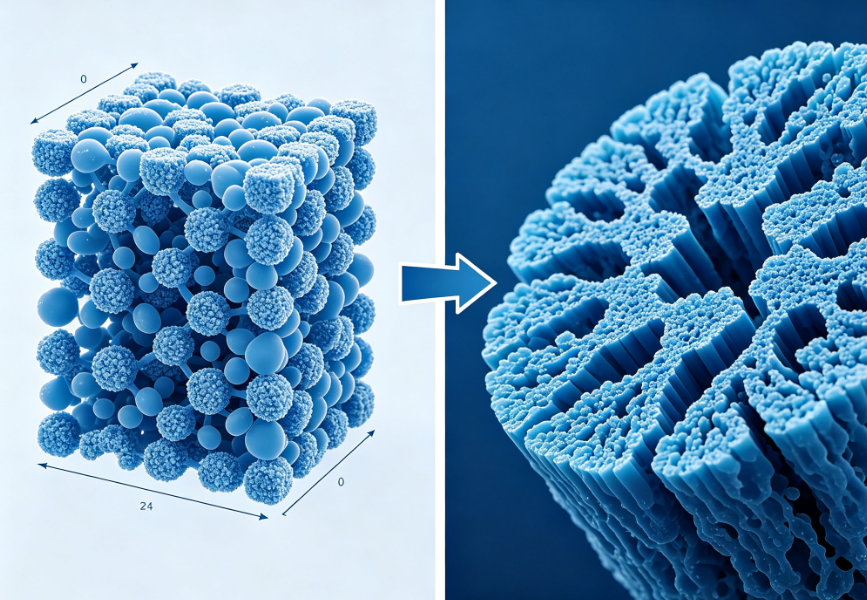
Increased carbide formation (M23C6 carbides)
Harder but more brittle structure
Superior wear resistance
Reduced plastic deformation under load
In practical terms, high carbon alloys behave like reinforced materials, while low carbon variants act more like balanced structural materials.
Mechanical Properties Comparison
1. Strength and Hardness
High carbon CoCr28Mo exhibits:
Higher hardness (typically +10–20%)
Improved wear resistance
Low carbon CoCr28Mo offers:
Better elongation
More resistance to cracking
2. Wear Resistance
Wear resistance is critical in joint implants where friction is constant.
High carbon: Excellent for articulating surfaces (e.g., femoral heads)
Low carbon: Adequate but less durable in high-friction zones
3. Fatigue Resistance
Low carbon variants typically perform better under cyclic loading, making them suitable for:
Structural implant components
Long-term load-bearing parts
Corrosion Behavior and Biocompatibility
Both variants are highly biocompatible, but differences emerge in specific environments.
Low Carbon Advantages
Reduced carbide boundaries → fewer corrosion initiation points
Better performance in chloride-rich body fluids
High Carbon Trade-Off
Carbide interfaces can become micro-galvanic corrosion sites
Slightly higher risk in long-term exposure
However, with proper processing and polishing, both materials meet stringent medical standards such as:
ASTM F75
ASTM F799
ISO 5832-4
Manufacturing Considerations: What Buyers Often Overlook
From a manufacturing perspective, carbon content significantly affects machinability and processing cost.
Low Carbon CoCr28Mo
Easier to machine
Better for precision components
Lower tool wear
High Carbon CoCr28Mo
More difficult to machine due to hardness
Requires advanced tooling and slower speeds
Higher production cost
For buyers sourcing finished or semi-finished products, this directly impacts:
Lead times
Pricing
Supplier capability requirements
Manufacturers with strong process control—such as SUNXIN—typically manage these challenges through optimized forging, heat treatment, and precision machining workflows, ensuring consistency across batches.
Application-Based Selection Guide
Choosing between low and high carbon CoCr28Mo should always be application-driven.
Use Low Carbon CoCr28Mo When:
Component requires high fatigue resistance
Complex machining is involved
Corrosion resistance is critical
Example: Implant stems, structural supports
Use High Carbon CoCr28Mo When:
Component is subject to high wear
Surface durability is the priority
Example: Joint articulation surfaces
Cost vs Performance: Finding the Balance
While high carbon alloys offer superior wear resistance, they come at:
Higher manufacturing cost
Increased machining difficulty
Low carbon alloys, on the other hand:
Provide better manufacturability
Reduce production complexity
Offer balanced performance
For many OEM buyers, the optimal solution is not choosing one over the other—but using both strategically within the same implant system.
Quality Control and Standards: What to Verify Before Purchasing
B2B buyers should always verify:
Chemical composition (especially carbon %)
Grain structure and carbide distribution
Mechanical test reports
Compliance with ASTM/ISO standards
Surface finish quality
Reliable suppliers will provide:
Mill test certificates (MTC)
Traceability documentation
Consistent batch quality
Subtle Supplier Insight: Why Process Capability Matters
Not all CoCr28Mo materials are equal—even within the same carbon category.
Differences arise from:
Melting process (VIM, ESR)
Forging quality
Heat treatment control
Manufacturers like SUNXIN focus on tight composition control and advanced processing techniques, which is particularly important for high carbon alloys where carbide distribution must be carefully managed to avoid brittleness.
For buyers, this means fewer defects, better consistency, and improved long-term implant performance.
Future Trends: Where CoCr28Mo Is Headed
Despite the rise of titanium alloys and ceramics, CoCr28Mo remains essential due to:
Superior wear resistance
Proven clinical history
Cost-effectiveness
Emerging trends include:
Hybrid implants combining multiple materials
Improved surface coatings
Additive manufacturing adaptations
Interestingly, carbon optimization continues to be a focus area, reinforcing how critical this “small” element really is.
FAQ Section
1. What is the main difference between low carbon and high carbon CoCr28Mo?
The primary difference lies in carbide formation, which affects hardness, wear resistance, and ductility. High carbon offers better wear resistance, while low carbon provides better fatigue performance.
2. Which is better for joint implants?
High carbon CoCr28Mo is generally preferred for articulating surfaces due to its superior wear resistance.
3. Is low carbon CoCr28Mo more corrosion-resistant?
Yes, slightly. Lower carbide content reduces potential corrosion initiation sites.
4. Why is high carbon CoCr28Mo more expensive?
Because it is harder to machine and requires more advanced manufacturing processes, increasing production costs.
5. Can both materials be used in the same implant?
Yes. Many advanced implant systems use both types strategically for optimal performance.
6. What standards should I look for when sourcing?
Common standards include:
ASTM F75
ASTM F799
ISO 5832-4
7. How do I choose a reliable supplier?
Look for:
Proven manufacturing capability
Consistent quality control
Experience with medical-grade materials
Conclusion: The Smart Buyer’s Perspective
Choosing between low carbon and high carbon CoCr28Mo is not about selecting the “better” material—it’s about selecting the right material for the right function.
Understanding how carbon content influences performance allows B2B buyers to:
Optimize implant design
Control costs
Improve product reliability
And perhaps most importantly, it helps avoid the common mistake of treating CoCr28Mo as a one-size-fits-all material.
In a market where precision and reliability define success, that level of understanding becomes a competitive advantage.